
 Retour
Medical Assistance in Dying with Professor Jocelyn Downie
Is the right to life also the right to choose how we die? Professor Jocelyn Downie, University Research Professor at Dalhousie University and a Member of the Order of Canada for her contributions to Canadian health law, joins host Hugo Martin to trace the road from Rodriguez's narrow 1993 rejection of assisted dying to the Supreme Court's landmark 2015 ruling in Carter v. Canada (Attorney General). Together they explore how changed evidence and changed law allowed the Court to revisit its own precedent, how Carter reshaped Sections 7 and 15 of the Charter, and how the "road from prohibition to permission" continues through Bill C-14, the Truchon decision, and Bill C-7, with the journey, as Downie puts it, still not over.
L'aide médicale à mourir avec la professeure Jocelyn Downie
Le droit à la vie est-il aussi le droit de choisir comment nous mourons? La professeure Jocelyn Downie, professeure de recherche à l'Université Dalhousie et membre de l'Ordre du Canada pour ses contributions au droit de la santé canadien, se joint à l'animateur Hugo Martin pour retracer le chemin menant du rejet serré de l'aide à mourir par 5 voix contre 4 dans la décision Rodriguez en 1993 jusqu'à l'arrêt marquant de la Cour suprême dans l'affaire Carter c. Canada (Procureur général) en 2015. Ensemble, ils explorent comment l'évolution des éléments de preuve et de la loi a permis à la Cour de revoir son propre précédent, comment l'arrêt Carter a remodelé les articles 7 et 15 de la Charte, et comment la « route de l'interdiction à la permission » se poursuit à travers le projet de loi C-14, la décision Truchon et le projet de loi C-7 — le parcours, selon les mots de Downie, n'étant toujours pas terminé.
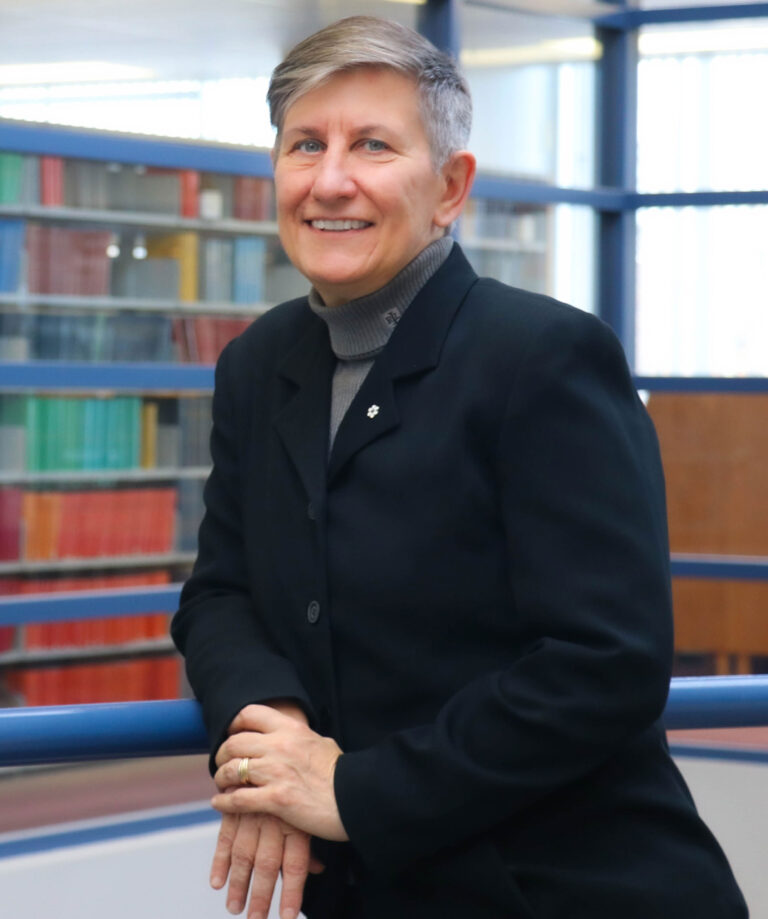
Professor Jocelyn Downie, Dalhousie University
Schulich School of Law and Faculty of Medicine, Dalhousie University
Jocelyn Downie is a University Research Professor at Dalhousie University, cross-appointed to the Schulich School of Law and the Faculty of Medicine. A leading authority on Canadian health law, she has played a central role in shaping the legal and policy landscape around medical assistance in dying, including through her scholarship on the Carter and Truchon litigation.
In 2018, she was appointed a Member of the Order of Canada in recognition of her contributions to Canadian health law, particularly in the areas of medical assistance in dying and women's health. Her work bridges legal scholarship and public policy, informing both the courts and Parliament as Canada's MAID regime has continued to evolve.
Professeure Jocelyn Downie, Université Dalhousie
Schulich School of Law et Faculté de médecine, Université Dalhousie
La professeure Jocelyn Downie est professeure de recherche à l'Université Dalhousie, où elle détient une double nomination à la Schulich School of Law et à la Faculté de médecine. Figure de proue du droit de la santé canadien, elle a joué un rôle central dans l'élaboration du paysage juridique et politique entourant l'aide médicale à mourir, notamment grâce à ses travaux universitaires sur les litiges Carter et Truchon.
En 2018, elle a été nommée membre de l'Ordre du Canada en reconnaissance de ses contributions au droit de la santé canadien, en particulier dans les domaines de l'aide médicale à mourir et de la santé des femmes. Son travail jette un pont entre la recherche juridique et les politiques publiques, éclairant à la fois les tribunaux et le Parlement à mesure que le régime d'AMM du Canada continue d'évoluer.
Contenu
Avant Rodriguez : le droit de refuser un traitement
Avant que le pays ne débatte de l'aide à mourir, il a d'abord dû établir si les patients pouvaient tout simplement refuser un traitement de maintien des fonctions vitales. Ce fut l'affaire Nancy B. au Québec, qui a clairement établi que les gens ont le droit de refuser un traitement dont ils ne veulent pas, même si la conséquence peut en être la mort. Un débat qui, dès ses premiers jours, a rencontré un fort soutien public en faveur d'une réforme, malgré l'immobilité de la loi.
Rodriguez : une décision serrée motivée par la peur d'une pente glissante
L'affaire de Sue Rodriguez a été tranchée par cinq voix contre quatre, le juge Sopinka rédigeant l'avis de la majorité. Downie est directe quant à ce qui a motivé cette majorité : « il s'agissait de spéculation de sa part plutôt que de preuves — il y avait une crainte de la pente glissante, mais il n'y avait pas de preuves pour étayer cette préoccupation, et pourtant cela a motivé la décision ». La majorité a également été influencée par un manque d'accord sur l'AMM parmi les associations médicales et par un consensus public perçu, bien que cela ait été démenti par les données sur l'opinion publique.
Le fossé : le droit écrit et le droit en pratique
Downie note que malgré l'article 241 criminalisant le suicide assisté, personne n'a jamais été condamné pour meurtre ou pour avoir aidé au suicide — les gens pouvaient plaider coupable à des accusations moindres et écopaient de peines avec sursis. La seule exception claire qu'elle signale est l'affaire Latimer, un cas d'euthanasie non volontaire, très différente de ce que les gens cherchaient à légaliser.
Préparer la contestation fondée sur la Charte
Downie décrit les motivations profondes sous-jacentes aux arguments juridiques : le respect de l'autonomie, la conscience que certaines personnes en fin de vie souffriront de manière intolérable, et le souci de protéger les personnes vulnérables. Elle trace également un parallèle direct avec un précédent historique : on retrouve des échos de l'analyse de l'affaire Morgentaler.
La décision de première instance de la juge Smith et la question du stare decisis
Downie explique le test appliqué par la juge Smith : elle a été convaincue par la preuve que les faits sur le terrain avaient changé de façon spectaculaire et que la loi avait changé de façon spectaculaire. Sur les faits, des décennies de preuves montraient désormais que la pente glissante était un mirage; sur le plan juridique, de nouveaux principes de l'article 7 — la portée excessive et la disproportion grossière — avaient émergé entre les deux affaires. Selon Downie, l'approbation du travail de la juge Smith par la Cour suprême a été catégorique : les juges l'ont affirmé à l'unanimité, en signant « Par la Cour ».
L'article 7, l'article 1 et le test Oakes
Downie explique pourquoi la Cour n'avait pas besoin de hiérarchiser les trois intérêts protégés par l'article 7 : les trois mènent vers l'autorisation de l'AMM. Quant aux raisons pour lesquelles l'interdiction a échoué à l'étape de l'atteinte minimale du test Oakes, elle pointe vers les preuves comparatives : on peut circonscrire soigneusement l'accès à l'AMM tout en protégeant les personnes vulnérables.
Une déclaration d'invalidité suspendue, et non une obligation
Downie corrige un malentendu courant : le gouvernement n'était pas tenu de légiférer; il aurait pu attendre les douze mois sans rien faire, et la loi aurait disparu, faisant de l'AMM un service de santé, ce qui est arrivé dans l'affaire Morgentaler. Ottawa a choisi de légiférer quand même, en partie pour fournir des directives aux cliniciens.
Le projet de loi C-14 et le problème du caractère « prévisible de façon raisonnable »
Downie décrit sa propre réaction face au projet de loi C-14, qui a ajouté l'exigence que la mort naturelle soit « prévisible de façon raisonnable » — une expression absente de l'arrêt Carter lui-même. Kay Carter elle-même n'aurait pas été admissible selon ce nouveau critère.
Truchon et le projet de loi C-7
Des litiges ont suivi presque immédiatement, pour aboutir à l'affaire québécoise Truchon, qui a invalidé l'exigence de mort naturelle prévisible. Le résultat a forcé le Parlement à retourner à la table de travail avec le projet de loi C-7 — bien que Downie souligne que tous les changements n'ont pas été pour le mieux, pointant du doigt l'exclusion de la maladie mentale comme seule condition médicale sous-jacente.
Prochaines étapes : maladie mentale, mineurs matures et demandes préalables
Downie décrit l'évolution de la portée de l'admissibilité comme un cercle qui rétrécit et s'élargit au fil des décisions et des lois. Le Québec a pris une longueur d'avance sur le reste du pays en permettant les demandes préalables. Downie prédit qu'il y aura également des litiges à venir sur les mineurs matures.
L'héritage de l'affaire Carter
Interrogée sur la fierté que les Canadiens devraient éprouver, Downie n'hésite pas : la décision a reconnu le droit de prendre des décisions cruciales d'une importance personnelle tout en établissant clairement que nous devons protéger les personnes vulnérables, et elle était empreinte d'une profonde compassion.
Décisions marquantes discutées
- Rodriguez c. Colombie-Britannique (Procureur général) (1993) — Décision de 5 contre 4 maintenant l'interdiction du suicide assisté
- Nancy B. c. Hôtel-Dieu de Québec (1992) — Droit des patients de refuser un traitement de maintien des fonctions vitales
- Carter c. Canada (Procureur général), 2012 BCSC 886 (décision de première instance) — Décision de la juge Lynn Smith
- Carter c. Canada (Procureur général) (2015) — Arrêt marquant invalidant l'interdiction de l'AMM
- Truchon c. Procureur général du Canada (Cour supérieure du Québec) — Invalidation de l'exigence de « mort naturelle prévisible de façon raisonnable »
- R. c. Morgentaler (1988) — Cité comme exemple parallèle (mentionné pour mise en contexte)
Concepts juridiques clés expliqués
- Aide médicale à mourir (AMM) — Fourniture légale d'une aide à une personne admissible qui cherche à mettre fin à ses jours
- Stare decisis — Principe selon lequel les tribunaux inférieurs doivent suivre les précédents des juridictions supérieures
- Portée excessive et disproportion grossière — Principes de justice fondamentale selon l'analyse de l'article 7
- Déclaration d'invalidité suspendue — Réparation retardant l'effet d'une décision pour donner aux gouvernements le temps de réagir
- Test Oakes / atteinte minimale — Cadre d'analyse de l'article 1 de la Charte
- Demande préalable — Demande d'AMM formulée avant la perte de la capacité décisionnelle
- Mineur mature — Personne n'ayant pas atteint l'âge de la majorité mais possédant la capacité décisionnelle d'un adulte
Ressources et références
- Rodriguez c. Colombie-Britannique (Procureur général), [1993] 3 R.C.S. 519
- Carter c. Canada (Procureur général), 2015 CSC 5
- Carter c. Canada (Procureur général), 2012 BCSC 886
- Truchon c. Procureur général du Canada
- R. c. Morgentaler, [1988] 1 R.C.S. 30
- Projet de loi C-14 (2016) — Loi fédérale initiale sur l'AMM
- Projet de loi C-7 (2021) — Modification de la loi fédérale sur l'AMM
- Charte canadienne des droits et libertés — Articles 1, 7 et 15
- Cour suprême du Canada — scc-csc.ca
Episode Content
Before Rodriguez: The Right to Refuse Treatment
Before the country ever debated assisted dying, it first had to settle whether patients could refuse life-sustaining treatment at all — the Nancy B case in Quebec made clear that people get to refuse treatment they don't want, even where the consequence could be death. A debate that from its earliest days was met with strong public support for reform, even as the law remained unmoved.
Rodriguez: A Narrow Decision Driven by Fear of a Slippery Slope
Sue Rodriguez's case was decided five-four, with Justice Sopinka writing for the majority. Downie is direct about what drove that majority: "it was speculation on his part as opposed to evidence, there was a fear of the slippery slope, but there wasn't evidence to support that concern, and yet it drove the decision." The majority was also swayed by a lack of agreement with MAID among medical associations, and a perceived lack of public consensus, although that was belied by the evidence about public opinion.
The Disconnect: Law on the Books, Law in Practice
Downie notes that despite Section 241 criminalizing assisted suicide, nobody was ever being convicted of murder or aiding suicide — they could plead to lesser charges and would have suspended sentences. The one clear exception she flags is the Latimer case, a case of non-voluntary euthanasia, very different from what people were trying to legalize.
Setting Up the Charter Challenge
Downie describes the deeper motivations beneath the legal arguments: respect for autonomy, an awareness that some people in the dying process will suffer intolerably, and a concern about protecting the vulnerable. She also draws a direct line to an earlier landmark: there are echoes of the Morgentaler analysis.
Justice Smith's Trial Decision and the Question of Stare Decisis
Downie explains the test Justice Smith applied: she was convinced by the evidence that the facts on the ground had changed dramatically and the law had changed dramatically. On the facts, decades of evidence now showed the slippery slope was a mirage; on the law, new Section 7 principles — overbreadth and gross disproportionality — had emerged between the two cases. The Supreme Court's endorsement of Smith's work was, in Downie's account, emphatic: they said unanimously, signing it "By The Court."
Section 7, Section 1, and the Oakes Test
Downie unpacks why the Court didn't need to rank the three interests protected by Section 7, since all three drive you toward allowing MAID. On why the prohibition failed the minimal impairment branch of the Oakes test, she points to comparative evidence: you can carefully circumscribe access to MAID and still protect the vulnerable.
A Suspended Declaration, Not an Obligation
Downie corrects a common misunderstanding: the government didn't have to legislate; they could have waited for the twelve months and done nothing, and the law would have been gone and MAID would have been a health service, which is what happened with Morgentaler. Ottawa chose to legislate anyway, in part to give guidance to clinicians.
Bill C-14 and the "Reasonably Foreseeable" Problem
Downie describes her own reaction to Bill C-14, which added a requirement that natural death be "reasonably foreseeable" — a term absent from Carter itself. The narrowing had real consequences: Kay Carter herself would not have qualified.
Truchon and Bill C-7
Litigation followed almost immediately, culminating in the Quebec case of Truchon, which struck down the reasonably foreseeable requirement. The result forced Parliament back to the table with Bill C-7 — though Downie is candid that not every change was for the better, singling out the exclusion of mental illness as a sole underlying medical condition.
What's Next: Mental Illness, Mature Minors, and Advance Requests
Downie describes the shifting scope of eligibility as a circle that shrinks and expands with each decision and law. Quebec has moved ahead of the rest of the country on advance requests. Downie predicts there will be litigation on mature minors in the future.
Carter's Legacy
Asked whether Canadians should be proud of Carter, Downie doesn't hesitate: it recognized the right to make profound decisions of personal importance while making clear that we need to protect vulnerable persons, and it had a deep compassion in it.
Landmark Decisions Discussed
- Rodriguez v. British Columbia (Attorney General) (1993) — 5-4 decision upholding the prohibition on assisted suicide
- Nancy B. v. Hôtel-Dieu de Québec (1992) — Right of patients to refuse life-sustaining treatment
- Carter v. Canada (Attorney General), 2012 BCSC 886 (trial decision) — Justice Lynn Smith's trial-level ruling
- Carter v. Canada (Attorney General) (2015) — Landmark decision striking down the prohibition on MAID
- Truchon c. Procureur général du Canada (Quebec Superior Court) — Struck down the "reasonably foreseeable natural death" requirement
- R. v. Morgentaler (1988) — Referenced for context
Key Legal Concepts Explained
- Medical Assistance in Dying (MAID) — Legal provision of assistance to a qualified person seeking to end their life
- Stare decisis — The principle that lower courts must follow the precedents set by higher courts
- Overbreadth and gross disproportionality — Principles of fundamental justice under Section 7 analysis
- Suspended declaration of invalidity — A remedy delaying the effect of a ruling to give governments time to respond
- Oakes test / minimal impairment — The framework under Section 1 of the Charter
- Advance request — A request for MAID made in advance of losing decision-making capacity
- Mature minor — A person under the age of majority who nonetheless possesses adult decision-making capacity
Resources and References
- Rodriguez v. British Columbia (Attorney General), [1993] 3 S.C.R. 519
- Carter v. Canada (Attorney General), 2015 SCC 5
- Carter v. Canada (Attorney General), 2012 BCSC 886 (trial decision, Smith J.)
- Truchon c. Procureur général du Canada
- R. v. Morgentaler, [1988] 1 S.C.R. 30
- Bill C-14 (2016) — Original federal MAID legislation
- Bill C-7 (2021) — Amended federal MAID legislation
- Canadian Charter of Rights and Freedoms, ss. 1, 7, 15
- Supreme Court of Canada — scc-csc.ca
Quiz — Testez vos connaissances
1. Quelle a été la répartition des voix lors de la décision Rodriguez de 1993?
A) Unanime B) 7-2 C) 6-3 D) 5-4
Réponse : D) 5-4 — l'une des divisions les plus serrées possibles, le juge Sopinka rédigeant l'avis de la majorité
2. Selon la professeure Downie, à quelle doctrine juridique la juge Lynn Smith a-t-elle dû faire face avant de s'écarter du précédent Rodriguez?
A) Chose jugée B) Stare decisis C) Élément moral D) Habeas corpus
Réponse : B) Stare decisis — le principe selon lequel les tribunaux inférieurs sont liés par les précédents des juridictions supérieures
3. Quels articles de la Charte ont servi de fondement à la contestation constitutionnelle dans l'affaire Carter?
A) Articles 2 et 8 B) Articles 7 et 15 C) Articles 12 et 15 D) Articles 7 et 24
Réponse : B) Articles 7 et 15 — la vie, la liberté et la sécurité de la personne, ainsi que les droits à l'égalité
4. Quelle condition d'admissibilité le projet de loi C-14 a-t-il ajoutée qui a ensuite été invalidée dans Truchon?
A) Une exigence d'âge minimal B) Une exigence de deux avis médicaux indépendants C) L'exigence que la mort naturelle soit « prévisible de façon raisonnable » D) Un délai de carence d'un an
Réponse : C) L'exigence que la mort naturelle soit « prévisible de façon raisonnable »
5. Laquelle des options suivantes n'est PAS encore permise au fédéral, bien qu'elle soit légale au Québec?
A) Les demandes préalables d'AMM B) L'AMM pour condition médicale grave et irrémédiable C) L'AMM pour handicaps physiques D) L'AMM avec consentement au moment de la prestation
Réponse : A) Les demandes préalables d'AMM formulées avant la perte de la capacité
Quiz — Test Your Knowledge
1. What was the vote split in the Supreme Court's 1993 Rodriguez decision?
A) Unanimous B) 7-2 C) 6-3 D) 5-4
Answer: D) 5-4 — one of the closest possible splits, with Justice Sopinka writing for the majority
2. According to Professor Downie, what legal doctrine did Justice Lynn Smith have to address before departing from Rodriguez?
A) Res judicata B) Stare decisis C) Mens rea D) Habeas corpus
Answer: B) Stare decisis — the principle that lower courts are bound by higher court precedent
3. Which Charter sections formed the basis of the constitutional challenge in Carter?
A) Sections 2 and 8 B) Sections 7 and 15 C) Sections 12 and 15 D) Sections 7 and 24
Answer: B) Sections 7 and 15 — life, liberty and security of the person, and equality rights
4. What eligibility requirement did Bill C-14 add that was later struck down in Truchon?
A) A minimum age requirement B) A requirement of two independent medical opinions C) The requirement that natural death be "reasonably foreseeable" D) A mandatory one-year waiting period
Answer: C) The requirement that natural death be "reasonably foreseeable"
5. Which of the following is NOT yet permitted federally, though it is legal in Quebec?
A) Advance requests for MAID B) MAID for a grievous and irremediable medical condition C) MAID for individuals with physical disabilities D) MAID with consent at the time of provision
Answer: A) Advance requests for MAID made before loss of capacity
Transcription complète
Transcription – Façonner le Canada
150 ans de décisions marquantes
Épisode 10 – L'aide médicale à mourir avec la professeure Jocelyn Downie
Durée : 00:46:26
Intro STD EN (00:02) Bienvenue à Façonner le Canada : 150 ans de décisions marquantes. Le Canada que nous connaissons aujourd'hui ne s'est pas construit par hasard. Argument par argument, jugement par jugement, il a été façonné par le droit au sein d'un système de justice unique, né de l'union de la civil law et de la common law, et intégrant de plus en plus les traditions juridiques autochtones. Dans cette série, nous marquons le 150e anniversaire de la Cour suprême du Canada en décodant certaines décisions qui ont défini nos droits, nos libertés et notre identité collective. Du droit criminel aux droits autochtones et au partage des compétences, les décisions que nous avons choisies de partager avec vous ne relèvent pas seulement de l'histoire ancienne. Elles façonnent encore notre réalité aujourd'hui. Je suis votre animateur, Hugo Martin. Et je vous invite à me rejoindre pour des conversations exclusives avec les neuf juges de la Cour suprême et de grands experts constitutionnels alors que nous découvrons le contexte, l'impact et l'héritage durable de ces jugements.
Laurence (01:11) Le droit à la vie est-il aussi le droit de choisir notre façon de mourir? Pour nous aider à explorer cette question puissante, nous sommes rejoints par la professeure Jocelyn Downie. Professeure de recherche universitaire à l'Université Dalhousie, elle a été nommée membre de l'Ordre du Canada en 2018 pour ses contributions majeures au droit de la santé canadien, particulièrement en ce qui concerne l'aide médicale à mourir et la santé des femmes. Nous discutons de la décision historique de 2015 dans l'affaire *Carter*, un arrêt qui a façonné le droit de mourir dans la dignité dans notre pays. Pendant des années, le Code criminel a interdit le suicide assisté. Cette interdiction avait été confirmée par la Cour suprême en 1993 dans la fameuse affaire *Rodriguez*, une décision serrée de 5 contre 4 où la majorité a accordé la priorité à la protection des personnes vulnérables sur l'autonomie individuelle. Mais plus de 20 ans plus tard, Kay Carter et Gloria Taylor, vivant toutes deux avec des conditions dévastatrices et incurables, ont contesté l'interdiction à nouveau. Elles soutenaient que la loi les plongeait dans un dilemme cruel : mettre fin à leur vie prématurément alors qu'elles en étaient encore physiquement capables, ou endurer une mort prolongée et douloureuse. La Cour suprême faisait désormais face à une question profonde. Devait-elle renverser son propre précédent et reconnaître l'accès à l'aide médicale à mourir? C'est la conversation dans laquelle nous plongeons aujourd'hui. Je suis Laurence Laperrière et j'espère que vous apprécierez cet épisode sur un sujet très important et d'actualité.
Hugo Martin (02:35) Merci beaucoup d'être avec nous pour cet épisode de Façonner le Canada : 150 ans de décisions marquantes, et bienvenue.
Jocelyn Downie (02:42) Merci, je suis très heureuse d'être ici.
Hugo Martin (02:43) Nous allons parler de l'aide médicale à mourir. Et avant d'aborder notre décision de principe, j'aimerais connaître le contexte... que se passait-il au Canada avant la légalisation de l'aide médicale à mourir?
Jocelyn Downie (02:59) Je remonterais en fait un peu avant l'affaire *Rodriguez*, car il y avait des débats au Canada sur le refus et le retrait d'un traitement de maintien de la vie avant même d'aborder l'AMM. Car pendant un certain temps — les gens l'ignorent probablement, car c'est tellement accepté aujourd'hui —, pendant un certain temps, les gens ne pouvaient même pas nécessairement faire respecter un refus de traitement. Il a donc fallu d'abord intenter des litiges à ce sujet. Et ce fut l'affaire *Nancy B.* au Québec, qui a établi clairement que les gens ont le droit de refuser un traitement dont ils ne veulent pas, même lorsque la conséquence pourrait être la mort. Nous avons donc eu ce débat, qui a été résolu. Ensuite, nous sommes passés au débat sur l'AMM, ce qui nous a amenés à l'affaire *Rodriguez*. Il faut comprendre qu'il y a eu une activité juridique, mais il y a eu aussi des discussions publiques et de l'opinion publique. Et l'opinion publique, dès le tout début, était très favorable à l'AMM.
Hugo Martin (03:53) Sue Rodriguez a été une décision importante. Cependant, elle était loin d'être unanime. C'était une décision de cinq contre quatre, et les juges dissidents... bien que le juge Sopinka ait écrit pour la majorité, il y avait aussi de solides...
Jocelyn Downie (04:05) Merci.
Hugo Martin (04:09) ...arguments selon lesquels l'aide médicale à mourir pouvait devenir une pente glissante (*slippery slope*); il tenait vraiment beaucoup à la protection des personnes vulnérables.
Jocelyn Downie (04:16) C'est exact. Je ferais remarquer qu'il s'agissait d'une spéculation de sa part plutôt que de preuves. Il y avait donc une crainte de la pente glissante, mais il n'y avait pas de preuves pour étayer cette préoccupation. Et pourtant, cela a guidé la décision, comme vous le dites. Ils s'inquiétaient également du manque de consensus sur l'AMM parmi les associations médicales au Canada et dans le monde. Ils estimaient qu'il y avait un manque de consensus public, bien que je pense que cela était contredit par les données sur l'opinion publique, qui était favorable à l'AMM. Mais vous avez raison de dire que le facteur principal de la décision majoritaire était, je crois, la crainte d'une pente glissante où des personnes vulnérables seraient forcées de recevoir l'AMM alors qu'elles n'en voulaient pas, et ainsi de suite. C'est donc cela qui a motivé la décision à l'époque.
Hugo Martin (05:07) L'essentiel de l'affaire était l'article 241(b), qui interdisait le suicide assisté. C'était fondamentalement cela. Le suicide assisté, nous savons tous ce que c'est : demander à un médecin, à un ami ou à un proche de vous aider à mourir, et c'était illégal. C'est donc la loi qui a été attaquée.
Jocelyn Downie (05:18) Ouais.
Hugo Martin (05:31) ...sur la base de la Charte canadienne. Ainsi, l'affaire *Sue Rodriguez* remonte à 1993, soit 11 ans après la Charte. Il n'y avait donc jamais eu de contestations auparavant, Downie?
Jocelyn Downie (05:35) Il y a eu des tentatives pour modifier la loi. Des projets de loi ont été présentés au Parlement. Il y a eu quelques contestations judiciaires. Elles n'ont pas mené bien loin lorsqu'il s'agit d'un projet de loi d'initiative parlementaire (*private member's bill*). Historiquement, ils n'allaient jamais bien loin. Et c'est ce dont il s'agissait. Ce n'étaient pas des projets de loi gouvernementaux, mais il y a eu de multiples tentatives pour la modifier. Et il y a eu quelques premières tentatives à un niveau inférieur, mais elles n'ont abouti nulle part devant les tribunaux non plus. Il y a également eu toute une série d'affaires dans lesquelles des individus ont été accusés en vertu des dispositions qui ont finalement été contestées. L'article 241, comme vous le dites, l'aide au suicide, mais aussi l'article 14. Je veux dire, c'est le meurtre, l'euthanasie, techniquement un homicide. Il y a donc eu un certain nombre de cas où des gens ont été accusés, mais personne n'a jamais été reconnu coupable de meurtre ou d'aide au suicide. Ils pouvaient plaider coupable à des infractions moindres...
Hugo Martin (06:23) Mhm.
Jocelyn Downie (06:38) ...ils obtenaient des sursis de peine, peu importe ce dont ils étaient reconnus coupables, ce qui constituait une infraction moindre. Il y avait donc ce décalage bizarre entre le Code criminel qui semblait... c'était très clair, c'est illégal. C'est illégal de la manière la plus stricte possible, car lorsque vous prenez le meurtre, cela comporte une peine d'emprisonnement à perpétuité. Et pourtant, personne — même si nous savions que ces affaires se produisaient, et que la police et les services de poursuite savaient qu'elles se produisaient —, personne n'allait en prison. Il y avait donc un décalage. Il y avait vraiment deux décalages. D'une part, un décalage entre l'opinion publique et le Code criminel, et d'autre part, dans l'application du Code criminel. Vous aviez donc cette infraction ou ces infractions très graves, mais personne n'allait en prison. Qu'est-ce qui se passait donc? Et ces affaires ont continué après l'affaire *Rodriguez*, car la décision *Rodriguez*, comme vous l'avez dit, s'est soldée par un vote de 5 contre 4, et elle n'a pas décriminalisé l'aide à mourir. On est restés avec ça. Oui.
Hugo Martin (07:32) Vous parlez d'autres affaires, nous pensons à l'affaire *Morgentaler* c'est certain. Vous nous dites également que, sur le plan factuel, il y avait beaucoup de cas de suicide assisté...
Jocelyn Downie (07:45) ...de suicide assisté ou d'euthanasie, des actes qui pouvaient faire l'objet d'une accusation en vertu du Code criminel. Il y a eu des affaires et personne n'allait en... La seule vraie affaire où des gens y sont allés est l'affaire *Latimer*, mais il s'agit d'une affaire d'euthanasie non volontaire, et cela n'est pas légal aujourd'hui non plus. Nous devons donc écarter celle-là car elle est très différente de ce que les gens tentaient de légaliser. Et ce qui est devenu légal, c'est l'euthanasie non volontaire, qui ne l'était pas, ne l'est pas, et je ne pense pas qu'elle le sera jamais au Canada. Et il est allé en prison. Mais pour ce qui est de faire réellement les choses qui relèveraient techniquement de l'aide au suicide ou de l'homicide dans une affaire d'euthanasie volontaire, non, ils ne subissaient pas les conséquences prévues par le Code criminel. En partie parce que l'appui du public envers cela...
Hugo Martin (08:12) Hehe.
Jocelyn Downie (08:37) ...n'était pas là. Et par conséquent, lorsque vous examinez l'exercice du pouvoir discrétionnaire en matière de poursuites (*prosecutorial discretion*), qui doit tenir compte de la question suivante : est-il d'intérêt public de poursuivre? Je pense que cela a influencé l'issue de ces affaires.
Hugo Martin (08:51) Et les attaques, disons, visant à changer la pensée de la société sur l'aide assistée... c'était fondé sur l'article 15, n'est-ce pas? Et l'article 7, la vie et la liberté. Nous en parlerons un peu plus tard. Mais quelle était l'approche? Quel était l'angle d'attaque qu'ils adoptaient?
Jocelyn Downie (09:06) Merci. ⁓ Sur le plan juridique, l'angle d'attaque était la Charte, l'article 7 et l'article 15, en soutenant qu'il s'agit de violations de ces deux droits et qu'elles ne sont pas justifiées dans une société libre et démocratique. Si l'on prend un peu de recul par rapport à la loi, ce qui pousse ces affaires et ce qui poussait l'appui du public envers ces affaires, c'est le respect de l'autonomie. C'est-à-dire la reconnaissance qu'il s'agit d'une décision d'une importance fondamentale pour les individus qui souffrent, la prise de conscience qu'un certain nombre de personnes, au cours du processus de fin de vie, souffriront de manière intolérable d'une façon qui ne peut être soulagée d'une manière avec laquelle elles se sentent à l'aise. Et ensuite, une préoccupation quant à la protection des personnes vulnérables. Ces trois éléments s'associaient pour alimenter le mouvement en faveur de la légalisation, mais d'une légalisation assortie de protections pour les personnes vulnérables.
Hugo Martin (10:05) La dissidence était donc fondée à la fois sur les articles 7 et 15. La juge McLoughlin s'est appuyée sur l'article 7, et nous avons le juge en chef Lamer qui s'est appuyé sur l'article 15.
Jocelyn Downie (10:14) Exact.
Hugo Martin (10:17) Mais je pense qu'il est très important à cette étape précise de parler de la dissidence, car cela nous mènera à notre décision de principe. Et notre décision de principe, nous le comprenons, proviendra de la Cour suprême... de la Colombie-Britannique avec la juge... parlons de l'affaire *Rodriguez*.
Jocelyn Downie (10:36) ...une décision de 5 contre 4, qui a probablement été la décision de 5 contre 4 la plus serrée de l'histoire. Nous ne pouvons jamais regarder derrière les portes closes pour voir de quel côté elle aurait pu pencher. Mais c'était une division très marquée qui s'est reflétée dans les discussions des comités parlementaires, les rapports spéciaux, toutes sortes de choses qui ne se sont pas produites d'une manière inattendue en étant divisées. Et comme vous le dites, nous avons eu des décisions qui mettaient l'accent sur l'aspect lié à l'égalité. Vous avez donc Sue Rodriguez, qui est une femme atteinte de la SLA (*ALS*), une affection neurologique dégénérative, qui allait la placer dans une situation d'incapacité physique telle qu'elle ne pouvait pas mettre fin à ses jours elle-même par suicide, mais qui voulait mettre fin à ses souffrances parce qu'elles lui étaient intolérables. Ainsi... les gens ont formulé la question en termes d'égalité. Ne pas lui permettre d'obtenir cela constitue de la discrimination fondée sur un handicap physique. Et d'autres l'ont formulée en termes de l'article 7, comme vous le dites, parce qu'il s'agit d'une décision d'une importance personnelle fondamentale. Il y a des échos de l'analyse de l'arrêt *Morgentaler*, n'est-ce pas? Lorsque vous prenez une décision d'une profonde importance personnelle, c'est une décision qui devrait pouvoir être prise par l'individu. Elle voulait prendre cette décision. Elle s'est battue pour... Et je pense qu'ils prêtaient une attention particulière et comprenaient le rôle de l'autonomie, sa capacité, qui était incontestable, sa capacité décisionnelle, la souffrance, car ils comprenaient ce que la SLA signifie. Ce n'est pas une belle façon de mourir...
Hugo Martin (12:12) Hehe.
Jocelyn Downie (12:14) ...et se sont concentrés là-dessus. Ils voyaient vraiment Sue Rodriguez comme une personne, l'individu qui fait face à cela, qui est entravé de plein fouet par la maladie et dans l'incapacité de... par la maladie. Et ils n'ont pas été convaincus par ce qui a convaincu la majorité en ce qui concerne cette notion de pente glissante, la distinction entre acte et omission, et les inquiétudes concernant les associations médicales, et ainsi de suite. Ils n'ont pas été convaincus par ces arguments, et ont donc estimé qu'il s'agissait d'une violation fondamentale qui ne pouvait être justifiée, et qu'il était possible d'avoir un système...
Hugo Martin (12:22) Ouais.
Jocelyn Downie (12:48) ...qui permettait en toute sécurité à certaines personnes d'y avoir accès, et que ne pas le faire consistait à restreindre le choix d'une manière que nous ne pouvons pas faire sous le régime de la Charte, en plus de constituer de la discrimination fondée sur un handicap.
Hugo Martin (13:00) Je pense que la première fois que l'on lit l'article 7, dont le titre est « Vie, liberté et sécurité de la personne », mais lorsque l'on lit la disposition elle-même, très, très courte : « Chacun a droit à la vie, à la liberté et à la sécurité de sa personne. Il ne peut être porté atteinte à ces droits qu'en conformité avec les principes de la justice fondamentale. » Chacun a droit à la vie...
Jocelyn Downie (13:08) Mhm.
Hugo Martin (13:24) ...la première fois que l'on lit ceci, ou lorsque les gens entendent cet épisode en ce moment, nous aurons quelqu'un pour dire : eh bien, vous avez le droit à la vie. Est-ce que cela signifie que vous avez le droit de mettre fin à votre vie?
Jocelyn Downie (13:35) Eh bien, dans la décision *Carter*, c'est très explicite sur ce point. Je pense que cela a surpris beaucoup de gens lorsqu'ils ont déclaré que refuser l'accès à l'AMM constitue une violation du droit à la vie, car nous avons tendance à penser que le droit à la vie est la continuation de la vie. Mais l'argument est le suivant : les gens mourront plus tôt qu'ils ne le feraient autrement lorsque l'AMM n'est pas permise, car ce que l'on fait, c'est que l'on anticipe le moment où l'on se retrouvera dans un état... d'incapacité physique à mettre fin à sa vie par suicide, et l'on met donc fin à ses jours par suicide plus tôt, ce qui constitue ainsi une violation du droit à la vie de cette façon.
Hugo Martin (14:13) Passons à l'affaire *Carter*, qui est notre décision de principe, mais parlons d'abord de l'affaire *Smith*...
Jocelyn Downie (14:15) D'accord.
Hugo Martin (14:19) ...la juge Smith siégeait, une juge de... il y avait aussi Lee Carter, Hollis Johnson, le Dr William Shoichet, la British Columbia Civil Liberties Association, ainsi que Gloria Taylor. Ils ont décidé de retenter le coup avec l'article 241(b). Et la juge Smith, dans une décision de 321 pages...
Jocelyn Downie (14:32) Voir
Hugo Martin (14:43) ...a analysé cette question en profondeur et a conclu que, fondamentalement, la société est mûre, qu'il y a suffisamment de différences dans l'affaire *Carter* par rapport à l'affaire *Sue Rodriguez* pour évoluer et contester la décision de la Cour suprême dans l'affaire *Rodriguez*. Or, c'est un concept qui peut paraître étranger à certains de nos auditeurs, car nous n'en avons pas parlé auparavant, mais il existe une règle appelée le *stare decisis* (le respect des présérends). Le *stare decisis* consiste en quelque sorte à dire, vous savez, tout tribunal inférieur à la Cour suprême doit suivre ce qu'a dit la Cour suprême. La juge Smith était très bien consciente de la règle du *stare decisis*. Elle a décidé de rendre une décision différente, mais en même temps, cela a été expliqué dans une décision très détaillée. J'aimerais que vous nous parliez de la décision de la juge Smith...
Jocelyn Downie (15:42) Bien sûr. Une première chose rapide concernant le *stare decisis* : la juge Smith est une juge siégeant seule au niveau du procès (*trial level*). Ensuite, il y a la Cour d'appel, puis l'affaire va à la Cour suprême du Canada. Et je soulève ce point parce que... elle rend une décision, elle explique tout au sujet du *stare decisis* et ainsi de suite, elle en tient compte. Nous y reviendrons dans un instant. La Cour d'appel a en fait infirmé sa décision...
Hugo Martin (15:48) Merci.
Jocelyn Downie (16:02) ...ce qui illustre bien le fait d'attirer l'attention de tout le monde sur le point du *stare decisis*, car la Cour d'appel l'a effectivement infirmée. On a tendance à l'oublier ou à l'ignorer, mais cela s'efface car, sur les motifs du *stare decisis*, ils se disent : non, la Cour suprême du Canada a statué là-dessus. Et puis l'affaire remonte à la Cour suprême du Canada. Et là, ils acceptent en fait qu'elle avait tout à fait raison d'examiner l'affaire. Elle soutient donc — cela lui a été soumis et elle en est convaincue — qu'en réalité, le *stare decisis* ne devrait pas l'empêcher d'agir, ne devrait pas simplement consister à dire : je suis liée par l'affaire *Rodriguez*, la Cour suprême a déjà statué là-dessus? Désolée, allez-en paix. Ce qui l'a convaincue, c'est la preuve selon laquelle, primo, les faits sur le terrain avaient radicalement changé, et secundo, le droit avait radicalement changé. Le *stare decisis* énonce donc : oui, vous êtes liée par le tribunal supérieur, mais il est des moments où vous ne l'êtes pas. Et ce sont ces moments-là. Si les faits sur le terrain ont suffisamment changé, si le droit a changé d'une certaine manière, vous êtes désormais autorisée à réexaminer la question. Et ce qu'elle a constaté, c'est que la preuve concernant ce que l'on savait des pentes glissantes, par exemple — nous avons parlé plus tôt de la majorité dans l'affaire *Rodriguez* qui s'inquiétait des pentes glissantes —, eh bien, la preuve de décennies désormais... était disponible pour montrer que la pente glissante était un mirage. Cela ne se produit pas. Le fait que les associations médicales avaient changé d'avis. L'Association médicale canadienne, au moment d'arriver à l'affaire *Carter*, était neutre sur la question. Toute cette preuve était désormais disponible. Et le droit avait également changé, car entre l'affaire *Rodriguez* et l'affaire *Carter*, vous avez l'élaboration des principes de justice fondamentale sous le régime de l'article 7, et c'est crucial, n'est-ce pas? Il y a deux volets. Il y a le droit, les droits à la vie, à la liberté et à la sécurité de la personne, mais aussi de ne pas y être porté atteinte sauf en conformité avec les principes de justice fondamentale. Dans l'affaire *Rodriguez*, il n'y avait pas de principe d'interdiction excessive (*overbreadth*) ou de disproportionnalité grossière (*gross disproportionality*). Dans l'affaire *Carter*, ce sont ces principes sur lesquels les demandeurs ont fondé leur cause et sur lesquels la juge Smith a pris sa décision pour affirmer que non, l'interdiction viole l'article 7. L'interdiction excessive et la disproportionnalité grossière sont donc apparues à mesure que la Cour suprême entendait différentes affaires. Il ne s'agit pas d'affaires relatives à l'AMM, mais d'autres types d'affaires, et ils ont introduit ces principes. Et une fois que ces principes eurent été introduits, et que les faits et la preuve furent disponibles, il était temps de relitiger l'affaire *Carter*. Et c'est pourquoi la juge Smith a pu contourner le principe du *stare decisis*. Elle n'avait pas les mains liées par celui-ci, car le monde avait changé. Et lorsque le monde change suffisamment, le système judiciaire évolue avec lui. Il doit évoluer avec lui. Nous devons reconnaître qu'une décision rendue il y a des décennies pouvait être erronée. Elle pouvait ne plus être valide. Et lorsque les faits changent, lorsque le droit change, c'est le moment de dire : examinons cela à nouveau. Et c'est ce qu'elle a fait. ...et lorsque vous l'avez fait, est-ce que vous aviez vu juste? Et ils ont répondu à l'unanimité avec toute la force possible, car ils ont signé la décision en tant que Cour... avec un C majuscule et un T majuscule (*The Court*), ce qui met en quelque sorte un point d'exclamation sur l'unanimité de celle-ci. Ils ont dit : vous avez absolument vu juste. C'est une décision tellement validante de la part de la Cour suprême que la juge Smith aurait dû se sentir très, très... ...rassurée par la rigueur de sa décision de première instance. Ils ont reconnu, respecté et tiré du réconfort de la preuve volumineuse qui a été présentée. Le fondement probatoire était donc extrêmement solide. La capacité du juge... à analyser de manière critique la preuve qui lui était présentée était très forte. Et puis son analyse juridique était irréprochable. Je pense que la Cour suprême a alors pu dire : on peut vraiment s'y fier. Non seulement ont-ils confirmé sa décision finale d'annuler l'interdiction, mais ils ont estimé qu'ils disposaient d'un fondement très solide sur les faits... Je veux dire, ils ne remplacent jamais un juge de première instance sur les faits, mais vous pouvez vous sentir plus ou moins en confiance... Et elle a tout exposé clairement. Vous avez souligné la longueur de la décision. Il y a une raison à cela. Il y avait tellement de preuves, et elle devait expliquer pourquoi elle jugeait certains éléments convaincants et d'autres non. Et je pense que cela a également rempli une fonction publique très importante pour la légitimité du droit. Lorsque vous prenez une décision aussi monumentale, il est important d'exposer les faits aussi clairement. Quelle est la preuve sur laquelle je fonde cette décision? Je pense que cela aide vraiment le public à comprendre pourquoi cette décision a été prise, à tirer du réconfort de la rigueur de l'analyse des faits, et à être également rassuré par les faits réels qui existent dans le monde, à savoir qu'il n'y a pas de pente glissante. Nous avons des décennies d'expérience dans des endroits et la pente glissante n'y est pas. Le public peut la lire et se dire : d'accord, je comprends comment elle est passée des faits à cette décision, à cette décision monumentale. Et puis la Cour suprême s'en empare et peut avoir confiance dans les faits. Elle fait sa propre analyse juridique, évidemment, mais elle conclut qu'elle a vu juste. ...la décision est courte, car \[la Cour suprême n'a pas eu\] à contester toutes sortes de choses qui se trouvaient dans sa décision. C'est un fondement, c'est un plan directeur (*blueprint*) pour leur décision.
Hugo Martin (21:41) Nous mettrons un lien vers la décision de la juge Smith dans les notes de l'épisode. Vous dites... la preuve à l'article 7 est si vaste. Nous parlons de l'état actuel du droit, de la pratique au Canada, des discussions avec les professionnels de l'éthique, les praticiens, évidemment les instances professionnelles, les organismes médicaux, le public, la communauté, l'opinion publique, les politiques de poursuite — vous l'avez dit... avant, vous savez, c'était un peu la façon dont les poursuites appliquaient l'article 241(b). Elle a également admis... et des preuves provenant d'autres juridictions, nous parlons de l'Oregon, de Washington à l'époque, de la Belgique, de la Suisse, du Luxembourg et de la Colombie-Britannique — l'impact de l'éthique sur le plan médical... Absolument un exploit d'analyse, et nous parlons seulement de la preuve à ce stade. Et maintenant, l'article 7 stipule : « Chacun a droit à la vie, à la liberté et à la sécurité de sa personne. » Il ne dit pas que la vie passe avant, et il ne dit pas que la liberté passe avant la sécurité. Ainsi, lorsque l'on examine l'analyse, il est tout à fait logique de la part de la Cour suprême de dire : aucun n'est plus important \[que l'autre\] ; la liberté signifie qu'il s'agit de choix personnels fondamentaux. Ce serait donc la première application de l'article 7 qu'ils ont décidé de faire. Il n'y a pas d'ordre. C'est un peu différent de lorsque nous lisons l'article 7, lorsque nous pensons : eh bien, chacun a droit à la vie. Fin de la phrase. Non, non, non, c'est la vie, la liberté et la sécurité. Et dites-moi si je me trompe, mais c'est l'une des façons dont nous pouvons lire cette décision.
Jocelyn Downie (23:15) Oui, je pense que c'était en un sens plus facile pour eux et qu'ils n'avaient pas à les disséquer (*parse them*), car tous les trois poussent à permettre l'AMM. Analysez donc le droit à la vie, car c'est cette notion de « je dois mourir plus tôt que je ne le voudrais autrement si je ne peux pas avoir accès à l'AMM », la liberté, la sécurité de la personne, concernant la prise de décision fondamentale. Tout se recoupe. Il n'est donc pas nécessaire de prioriser quoi que ce soit, car rien n'est en concurrence et tous poussent dans la même direction.
Hugo Martin (23:46) Oui, merci. Oui. Il y a un test après cela, fondé sur l'article 1 de la Charte. Dites-nous donc un peu... elle n'a donc pas été sauvée, pour ainsi dire. L'article 241(b) n'a pas été sauvé par l'article 1, qui est le test d'Oakes.
Jocelyn Downie (23:48) Oui. Merci Au sein de l'article 7, il y a deux volets, n'est-ce pas? Avons-nous une violation du droit à la vie, à la liberté et à la sécurité de sa personne? Oui, cochez la case. ⁓ Mais était-ce en conformité avec les principes de justice fondamentale? Car si ce n'est pas en conformité avec ceux-ci, on ne se rend même pas à l'article 1. Et si c'est le cas, alors il y a violation de l'article 7. Maintenant, lorsque vous passez à l'article 1, l'un des éléments du test d'Oakes est l'atteinte minimale (*minimal impairment*), ce qui signifie : avez-vous limité le droit aussi peu que possible, aussi peu que vous le deviez afin d'atteindre les objectifs de celui-ci? L'analyse au titre de l'article 1 qu'ils effectuent est donc : est-ce prescrit par la loi? Oui, c'est écrit dans le Code criminel. Est-ce démontrablement justifié dans une société libre et démocratique? Et c'est là que nous entrons dans le test d'Oakes. L'élément clé du test est : eh bien, est-ce relié de manière rationnelle? Oui. ⁓ Mais est-ce une atteinte minimale? Non. Et c'est là que la preuve entre en jeu pour correspondre à la loi ou pour éclairer l'analyse de la situation juridique. Car ce que toutes ces autres juridictions démontrent, c'est que l'on peut circonscrire soigneusement l'accès à l'AMM tout en protégeant les personnes qui meurent par suicide lors de moments de faiblesse — c'est le langage fréquemment utilisé. Elles démontrent que l'on peut le faire, qu'il n'est pas nécessaire d'avoir une interdiction générale (*blanket ban*) pour protéger les gens. On peut avoir un cercle permissif. Vous disposez donc de votre sphère soigneusement circonscrite au sein de laquelle les gens peuvent avoir accès à l'AMM... si vous pouvez faire cela tout en protégeant les personnes vulnérables, alors votre loi n'est pas démontrablement justifiée dans une société libre et démocratique. Et c'est la base de cette décision, en son cœur. L'aspect le plus fondamental est de dire : non, vous pouvez avoir un régime clairement défini qui permet l'AMM pour certains, et protège précisément les personnes que vous voulez protéger.
Hugo Martin (25:55) Alors maintenant, nous avons besoin de règles. Nous disons que l'article 241(b) est inconstitutionnel, ce qui signifie que dès le lendemain... tout le monde peut obtenir immédiatement l'aide médicale à mourir. C'est un balado audio, mais vous dites vigoureusement non de la tête. C'est donc un non. La première chose qu'a faite la Cour suprême, c'est : d'accord, c'est notre décision, mais elle n'entre pas en vigueur dès maintenant. Une fois de plus, nous constatons que notre Cour suprême est très à l'écoute...
Jocelyn Downie (26:07) D'accord.
Hugo Martin (26:28) ...de la société canadienne en disant : prenons maintenant une pause. Nous devons établir certaines règles, une réglementation, une façon de faire. Comment cela fonctionne-t-il, professeure Downie?
Jocelyn Downie (26:39) C'est ce qu'on appelle une suspension de la déclaration d'invalidité. Et ce qu'ils font — et ce n'est pas inédit —, c'est qu'ils disent, lorsqu'ils annulent une loi, qu'ils reconnaissent qu'il peut falloir du temps pour mettre en œuvre des systèmes afin de traiter l'activité désormais légale, quelle qu'elle soit, et ils disent exactement ce que vous avez dit, c'est-à-dire : d'accord, nous l'annulons, mais nous suspendons l'effet de notre déclaration d'invalidité pour une période de temps « x ». Et ils ont fait cela initialement pour 12 mois. Cela a fini par être prolongé de quatre mois supplémentaires en raison d'une élection et du fait que le gouvernement n'était pas prêt. Ils donnent donc du temps au gouvernement. Il est important de le souligner car les gens l'énoncent souvent faussement. Ils disent : eh bien, le gouvernement a dû légiférer. En fait, le gouvernement...
Hugo Martin (27:18) Vous
Jocelyn Downie (27:29) ...n'était pas obligé de légiférer. Il aurait pu attendre la fin des 12 mois et ne rien faire, et alors la loi aurait disparu et l'AMM aurait été un service de santé. Et c'est ce qu'ils ont fait avec l'affaire *Morgentaler* : la loi sur l'avortement a été annulée, le gouvernement fédéral n'a jamais introduit... enfin, il a introduit, mais n'a jamais adopté de loi qui fournirait ce genre de cadre réglementaire pour l'avortement. L'avortement est donc réglementé exactement comme tout autre service de santé au Canada au niveau provincial et territorial. Le gouvernement n'y était donc pas tenu, mais il a choisi de le faire. Et on lui a donc accordé ce délai de 12, puis de 16 mois pour déterminer comment il souhaitait procéder, quels critères d'admissibilité, quelles mesures de protection procédurales, et pour donner également non seulement au gouvernement fédéral, mais aussi aux provinces et territoires, le temps de mettre en place des systèmes, des systèmes d'orientation pour les patients, la formation des cliniciens. C'était une pratique entièrement nouvelle. ...la déclaration d'invalidité a pris effet, puis la législation fédérale a été mise en place pour réglementer la pratique.
Hugo Martin (28:31) Après l'affaire *Carter*... \[le gouvernement\] n'avait pas l'obligation de légiférer. Cependant, ils ont dit : établissons certains critères... Pourquoi le gouvernement a-t-il décidé de légiférer? Pourquoi le gouvernement a-t-il décidé d'établir des règles?
Jocelyn Downie (28:46) Je pense qu'il voulait que cela soit offert d'une manière prudente et circonscrite. Il voulait guider les cliniciens pour qu'ils sachent ce qu'ils pouvaient et ne pouvaient pas faire. Il voulait que le public ait confiance dans le système et ne pense pas que c'était porte ouverte à tout (*free-for-all*). Je pense donc que cela... a également restreint la portée. Je ne suis pas sûre que c'était intentionnel, mais c'est ce qui s'est produit. Les autres aspects de cela concernent des éléments comme les mesures de protection procédurales. C'est pour avoir un régime bien réglementé pour cette pratique, et ils ont donc mis en place la législation fédérale, sachant qu'il faudrait faire beaucoup plus au niveau provincial et territorial, car bien sûr, il s'agit de la santé, et la santé relève en grande partie des provinces. Par conséquent, les provinces et les territoires allaient devoir établir des systèmes...
Hugo Martin (29:40) Vous avez parlé... De l'interdiction à la permission : le chemin sinueux de l'aide médicale à mourir au Canada. Le récit se divise en trois phases : l'ère *Rodriguez*, qui serait l'interdiction ; l'ère *Carter*, qui serait l'établissement du droit ; et l'ère législative, qui est la réponse parlementaire... Et cela nous a menés à une affaire appelée *Truchon*, car le projet de loi C-14 allait un peu au-delà de ce que la Cour suprême nous avait enseigné dans *Carter*.
Jocelyn Downie (30:28) La Cour suprême du Canada a déclaré : nous annulons cette disposition dans la mesure où elle ne permet pas l'accès aux personnes qui ont un problème de santé grave et irrémédiable entraînant des souffrances persistantes et intolérables qui ne peuvent être soulagées dans des conditions qu'elles jugent acceptables. Ensuite, ce que le Parlement fédéral a fait, c'est qu'il a pris « problème de santé grave et irrémédiable » et y a inséré une définition dans le projet de loi C-14. Et cette définition a restreint l'admissibilité, car elle stipulait qu'il fallait avoir une maladie, un affection ou un handicap sérieux et incurable. D'accord. Être dans un état avancé de déclin irréversible de ses capacités. Toujours conforme à *Carter*. Éprouver des souffrances persistantes et intolérables qui ne peuvent être soulignées par des moyens acceptables — encore une fois conforme à des conditions acceptables. Et puis il a été stipulé que la mort naturelle devait être devenue raisonnablement prévisible (*reasonably foreseeable*). C'est le moment précis où, en lisant cela, je suis tombée de ma chaise. Primo, qu'est-ce que cela signifie sur terre? Car je me rappelle avoir vu lors d'un point de presse technique avant sa publication publique — comme ils le font une heure avant —, que la mort naturelle est « récemment prévisible ». Tout le monde est certain. J'ai donc posé la question, évidemment, et la réponse a été : non, non, nous ne voulons pas dire cela. Nous voulons dire : une proximité suffisante avec... le cours de votre vie a changé en raison d'un nouveau diagnostic, nous connaissons désormais la trajectoire qui vous mène vers votre mort naturelle. Ils ont essayé de l'expliquer. Une chose que nous avons soulignée, lorsque l'on leur a présenté une première explication, c'était du genre : Kay Carter n'aurait pas été admissible. La mort de Kay Carter était facilement prévisible à échéance de 10 ans... Kay Carter souffrait de sténose rachidienne. Délébérative, c'est vrai. Mais selon les tables actuarielles, elle aurait pu vivre encore 10 ans. C'était donc cette notion bizarre du genre : ils ont d'abord commencé par dire : vous êtes proche de la mort, vous mourez. Eh bien, Kay Carter ne l'était pas. Ils ont donc dû soudainement pivoter, car je pense qu'ils l'ignoraient. Et ils ont donc pivoté vers l'idée qu'il suffisait que cela puisse inclure Kay Carter, ce qui les obligeait à adhérer à cette notion d'une trajectoire prévisible vers la mort. Nous savions comment Kay Carter allait mourir. Cela allait juste prendre un certain temps. Un changement de cap à ce sujet. Et, vous savez, dans les 10 jours suivant le dépôt du projet de loi C-14, J.J. Arvey (*Joe Arvay*), qui était l'avocat principal dans l'affaire *Carter*, était de retour devant les tribunaux parce qu'il était inconstitutionnel. Il était incompatible avec la Charte. Il était incompatible avec la décision *Carter*. Joe est arrivé. J'étais là, nous plaidions : ceci est incompatible avec *Carter* et la Charte, mais ils n'étaient pas d'accord et ils ont donc adopté la loi. Il y a donc eu immédiatement un litige, et ce litige a eu lieu en Colombie-Britannique, puis par la suite au Québec, et c'est l'affaire *Truchon*. C'est celle qui a fini par mener à une décision finale. Il s'agissait donc de deux personnes, toutes deux atteintes de handicaps, de handicaps graves, qui affirmaient que cette condition de « mort naturelle raisonnablement prévisible »... etait incompatible avec *Carter*. Vous avez restreint la portée de *Carter*, ce que vous ne pouvez pas faire. C'est une décision de la Cour suprême du Canada. Et elle viole nos droits garantis par la Charte, c'est évident. Nous avons donc eu, une fois de plus, une décision brillante... La qualité de la décision, tout comme dans l'affaire *Carter*, est exceptionnelle. Et nous avons beaucoup de chance, en tant que Canadiens, d'avoir ces deux décisions de première instance dotées d'un tel... soin, de telles réflexions et de telle rigueur. Elles apportent des changements monumentaux dans notre droit et elles sont solides. Quelle que soit l'issue de la décision, on peut la respecter. Mais nous avons eu cela à nouveau, la preuve était incroyablement solide. Son analyse réfléchie de ce qui lui était présentée, les contre-interrogatoires qui ont révélé les faiblesses de la preuve concernant les pentes glissantes, et ainsi de suite. Elle a donc passé tout cela en revue. Et elle a analysé la décision *Carter* pour voir comment elle s'appliquait à cette question. Et elle est arrivée à la conclusion que la condition de la mort naturelle devenue raisonnablement prévisible devaît être annulée.
Hugo Martin (34:40) Le Parlement du Canada est donc retourné à la planche à dessin... il a coupé le projet de loi C-14 en deux et a accouché du projet de loi C-7, qui a supprimé l'exigence de mort naturelle raisonnablement prévisible, c'est bien cela?
Jocelyn Downie (34:54) Exact. Et tout comme pour la décision de la Cour suprême du Canada dans l'affaire *Carter*, il y a eu une suspension de la déclaration d'invalidité dans l'affaire *Truchon*. Encore une fois, ils n'étaient pas obligés de légiférer, mais ils ont choisi de le faire. Ils ont choisi d'adopter le projet de loi C-7. Ils ont bel et bien supprimé le critère de la mort raisonnablement prévisible. Ils ont en fait apporté d'autres modifications — dont certaines, à mon avis, étaient très bonnes, et une très importante qui, selon moi, était très mauvaise, car elle était encore une fois incompatible avec la décision *Carter* : c'est l'exclusion de la maladie mentale comme seule condition médicale sous-jacente.
Hugo Martin (35:26) Parlons de l'impact de l'affaire *Carter*. Et je vais utiliser vos propres mots : « Le chemin de l'interdiction à la permission pour l'AMM au Canada a été long et sinueux. Le voyage n'est pas terminé »... aujourd'hui.
Jocelyn Downie (35:31) Merci
Hugo Martin (35:38) ...il y a un besoin au Canada pour l'AMM, nous offrons, dirais-je, des soins médicaux humains aux personnes qui en ont besoin. Que devons-nous surveiller à l'avenir? Et quel est l'héritage de l'affaire *Carter*?
Jocelyn Downie (35:55) Ce que nous surveillons pour l'avenir, c'est la maladie mentale comme seule condition sous-jacente... Visualisez donc un cercle qui représente l'affaire *Carter*, qui correspond aux critères d'admissibilité. Ensuite, nous introduisons le projet de loi C-14 et ce cercle se réduit. Ensuite, nous avons la décision *Truchon* et le cercle s'élargit pour retrouver les mêmes limites que dans *Carter*. Puis nous avons le projet de loi C-7 qui le réduit à nouveau. C'est donc une chose à surveiller. L'autre chose à surveiller est la discussion sur les demandes anticipées (*advanced requests*), qui n'a pas été traitée dans l'affaire *Carter*. Pendant des années, nous avons eu au Canada des directives préalables (*advance directives*) : ce que c'est, c'est une façon de dire « voici les décisions que je veux, que je prends maintenant concernant mes soins pour l'avenir si je perds ma capacité, ou voici qui je veux désigner pour prendre mes décisons lorsque je perds ma capacité ». C'est en place depuis des décennies maintenant. C'est réglementé au niveau provincial et territorial. Et nous pouvons dire : je peux affirmer que si je suis dans un état végétatif persistant, je ne veux aucune nutrition ou hydratation artificielle, ou si j'attrape une pneumonie, je ne veux pas d'antibiotiques, ce genre de choses. C'est bien établi en droit. Mais vous ne pouvez pas demander l'AMM par le biais de ces instruments. L'AMM ne serait pas permise en vertu de la législation provinciale et territoriale sur les directives préalables. Là où les demandes anticipées entrent en jeu, c'est qu'il s'agit d'une demande d'AMM formulée avant la perte de capacité. Et à l'heure actuelle, sur le plan fédéral, c'est illégal, car il faut donner un consentement exprès immédiatement avant la prestation de l'AMM. Vous en faites donc la demande et passez par tout un processus, mais juste avant l'aiguille, vous devez donner un consentement exprès, avec une petite exception sur laquelle nous ne nous attarderons pas pour l'instant. Sauf que la grande exception à cette affirmation de « illégal sur le plan fédéral », c'est que c'est légal au Québec. C'est désormais légal et cela est mis en œuvre au Québec, car le Québec possède sa propre législation sur l'AMM. Nous n'en avons pas encore parlé car nous nous sommes concentrés sur *Carter* et le fédéral, mais le Québec a emboîté le pas et a introduit sa propre législation sur l'AMM il y a des années. Et par la suite, ce qu'il a fait récemment, c'est de dire : D'accord, nous sommes maintenant dans une situation où nous allons permettre les demandes anticipées. Ainsi, avant la perte de capacité, de la capacité décisionnelle, je peux dire : si on me diagnostique une affection qui me fera perdre la capacité — l'exemple classique qui inquiète tout le monde est la démence, la maladie d'Alzheimer —, si j'ai cela, je peux dire : lorsque je me retrouverai dans tel ou tel état et que je n'aurai plus la capacité décisionnelle, je consens à l'AMM. Et c'est légal au Québec, mais le reste du pays ne peut pas l'avoir. La grande majorité des Canadiens le veulent. Mais le Québec peut le faire... Le Québec, de manière intéressante, car bien sûr le Code criminel est fédéral... Les auditeurs se disent peut-être : « Attendez une minute, c'est illégal en vertu du Code criminel, légal en vertu de la législation sur la santé du Québec, comment les cliniciens peuvent-ils l'offrir? » Au départ, j'aurais dit à n'importe quel clinicien québécois de ne pas l'offrir, car peu importe que le Québec ait dit que vous le pouviez, il y a le Code criminel, vous pourriez donc faire l'objet d'une accusation. Mais le ministre de la Justice et le Directeur des poursuites criminelles et pénales au Québec ont déclaré explicitement que tant que les cliniciens suivent la loi québécoise, ils ne seront pas poursuivis en vertu du Code criminel.
Hugo Martin (39:00) Hehe.
Jocelyn Downie (39:15) dans un certain sens. Les mineurs matures (*mature minors*), par exemple, n'étaient pas devant la Cour. Il était question d'adultes compétents. Un mineur mature est un individu âgé de moins de l'âge de la majorité qui possède néanmoins la capacité décisionnelle de quelqu'un qui a 22, 55 ans, peu importe, il a une pleine capacité décisionnelle. Il a simplement moins de l'âge de la majorité, ce qui est arbitraire. Et il prend des décisions en matière de soins de santé tout le temps. Il peut refuser un traitement de maintien de la vie, par exemple. Il peut donc prendre des décisions de vie ou de mort, mais n'est pas autorisé à recevoir l'AMM pour l'instant. Il y aura donc des litiges à ce sujet à l'avenir, j'en suis sûre, mais cela ne découle pas de la même manière de l'affaire *Carter* que la maladie mentale et la mort naturelle raisonnablement prévisible.
Hugo Martin (39:56) En tant que Canadiens, devrions-nous être...
Jocelyn Downie (39:59) ...en effet. Il y a tellement de sujets de fierté.
Hugo Martin (40:02) Est-ce qu'il y a... y a-t-il d'autres juridictions à travers le monde qui parlent de l'affaire *Carter*, de ces... Y a-t-il des lois, des règles qui ont été mises en place dans d'autres juridictions, d'autres pays, en raison de l'affaire *Carter*?
Jocelyn Downie (40:16) Il y a une telle jalousie parmi mes collègues du monde entier de voir que nous avons l'affaire *Carter*. Elle a été très importante dans d'autres juridictions. Ils se tournent vers le Canada, non seulement vers l'affaire *Carter*, mais vers ce qui a découlé de l'affaire *Carter*, pour voir un système qui, selon moi, fonctionne extrêmement bien. Et pourquoi les gens devraient-ils être fiers de l'affaire *Carter*? Je pense qu'elle a reconnu le droit à la vie et à la sécurité de la personne. Elle a reconnu le droit de prendre des décisions profondes d'une importance personnelle. Et elle nous a accordé tout cela tout en clarifiant très clairement que nous devons protéger les personnes vulnérables. Absolument pas question d'abandonner cela. Elle était également empreinte d'une profonde compassion. Si vous lisez la décision, je veux dire, le premier paragraphe est tellement fort avec ce qu'il conclut... qu'une personne se trouvant dans la situation de quelqu'un comme Gloria Taylor fait face à cette horrible décision : soit mettre fin à sa vie par suicide plus tôt, soit subir une période de souffrance prolongée et persistante dont elle ne veut pas. Et le langage utilisé est : ce choix est « cruel ». Et cela a montré que la Cour faisait preuve d'humanité. Ils ont compris ce qui était au cœur de la décision. Et cela les a conduits dans l'analyse juridique qui a ensuite affirmé ce qu'un être humain dirait. Nous avons cette décision qui était si réfléchie et minutieuse, et elle a fourni au monde entier — lorsque l'on examine la décision de première instance —, une analyse extrêmement robuste de la preuve qui était disponible partout dans le monde. Et cela est utile pour les législateurs et les tribunaux du monde entier. C'est également un modèle de décision, dirais-je, en matière... d'utilisation de la science sociale — elle avait un philosophe devant elle, la preuve en matière d'éthique, la preuve clinique —, tout cela est très important dans les litiges constitutionnels. Donc, au-delà du contexte de l'AMM, l'affaire *Carter* est très importante pour les litiges constitutionnels, car elle montre comment bien faire les choses en matière de questions d'importance sociale.
Hugo Martin (42:24) Incredible. Vous avez absolument... c'est vrai que depuis 1982 ou 1983, les premières affaires concernant la... cela a évolué dans la façon dont nous analysons les affaires et dont nous devons présenter la preuve afin d'obtenir une décision. Et comme vous l'avez dit, c'est au niveau du procès. Nous n'avons donc pas...
Jocelyn Downie (42:24) On dirait que vous voulez dire quelque chose.
Hugo Martin (42:43) ...attendu que la Cour suprême fasse toute cette analyse. La juge Smith l'a fait, et la juge Baudouin également dans l'affaire *Truchon*. J'aimerais citer l'un des extraits de la décision *Carter* de la Cour suprême du Canada : « Le suicide assisté est un crime au Canada. Par conséquent, les personnes qui souffrent de maladies graves et irrémiables ne peuvent demander l'aide d'un médecin pour mourir et peuvent être condamnées à une vie de souffrances aiguës et intolérables. »
Jocelyn Downie (42:48) Merci
Hugo Martin (43:10) « Une personne confrontée à cette perspective a deux options : elle peut mettre fin à ses jours prématurément, souvent par des moyens violents ou dangereux, ou elle peut souffrir jusqu'à ce qu'elle meure de causes naturelles. Le choix est cruel. » Paragraphe 1.
Jocelyn Downie (43:21) Merci C'est tellement fort. L'humanité transparaît à la fois dans la décision de première instance dans l'affaire *Carter* et dans la décision *Truchon* également. Mais vous pouvez imaginer : si vous avez plaidé l'affaire *Carter* tout au long du procès et de l'appel, et que vous vous trouvez devant la Cour suprême et lisez la décision... J'étais assise à ma table de salle à manger. J'avais un iPad, un ordinateur portable et mon téléphone. Et la décision s'affiche, et je lis le premier paragraphe. C'était un moment. C'était un moment tellement profond, car vous saviez à ce moment-là où la décision allait mener. Et vous saviez aussi qu'ils comprennent et qu'ils se soucient, ce qui compte pour nous lorsque nous examinons nos tribunaux, je pense, en tant que Canadiens.
Hugo Martin (44:08) Vous avez tout à fait raison. Professeure Jocelyn Downie, merci beaucoup pour votre vision, votre générosité et votre humanité en nous expliquant ce qu'est l'affaire *Carter*, ce qu'elle nous lègue et en quoi il s'agit d'une décision historique au Canada. Merci beaucoup, professeure Downie.
Jocelyn Downie (44:26) C'est un plaisir. Merci.
Outro STD EN (44:31) Merci de nous avoir rejoints pour cet épisode de Façonner le Canada : 150 ans de décisions marquantes. Comme nous l'avons exploré aujourd'hui, le droit n'est pas statique, il est vivant. Chaque décision de la Cour suprême ajoute une pierre à la fondation de notre société. Pour des liens vers les décisions discutées et plus d'informations sur nos invités, visitez shaping-canada.ca et assurez-vous de lire les notes d'émission. Abonnez-vous sur votre plateforme de balado préférée pour ne rien manquer de cette série marquant le 150e anniversaire de la Cour suprême du Canada. Merci à tous ceux et celles qui ont contribué à ce projet. La Cour suprême du Canada, le très honorable Richard Wagner, juge en chef du Canada, les honorables Nicolas Kasirer, Suzanne Côté, Andromache Karakatsanis, Sheila Martin, Malcolm Rowe, Mahmoud Jamal, Michelle O'Bonsawin et Marie-Josée Hogue. Les professeurs Louise Langevin, Jocelyn Downie, Kerri Froc, Naomi Metallic, Karen Drake, Denis Nadeau, Félix Mathieu, Érik Labelle Eastaugh, Marcus Moore, Joel Bakan, Howard Kislowitz, Richard Moon et François Tanguay-Renault. Merci à maître Michel Lebrun, Mmes Sandrine Raymond, Laurence Lapérière et Laurence Thériault, M. Peter Warren, et notre productrice, Constance Saint-Pierre. Ce projet a été rendu possible grâce au gouvernement du Canada. Je suis Hugo Martin. À la prochaine.
Full transcript
Transcript – Shaping Canada
150 years of landmark decisions
Episode 10 – Medical Assistance in Dying with Professor Jocelyn Downie
Duration: 00:46:26
Intro STD EN (00:02) Welcome to Shaping Canada, 150 years of landmark decisions. The Canada we know today wasn't built by chance. Argument by argument, judgment by judgment, it was forged by law within a unique justice system born from the union of the civil law and common law and increasingly Indigenous legal traditions. In this series, we mark the Supreme Court of Canada's 150th anniversary by decoding some rulings that defined our rights, our freedoms, and our collective identity. From criminal law to Indigenous rights and the division of powers, the decisions we chose to share with you are not just ancient history. They still shape our reality today. I am your host, Hugo Martin. And I ask you to join me for exclusive conversations with the nine justices of the Supreme Court and leading constitutional experts as we uncover the context, the impact, and the lasting legacy of these judgments.
Laurence (01:11) Is the right to life also the right to choose how we die? To help us explore this powerful question, we're joined by Professor Jocelyn Downie. A university research professor at Dalhousie University, she was appointed a member of the Order of Canada in 2018 for her leading contributions to Canadian health law, particularly regarding medical assistance in dying and women's health. We discussed the landmark 2015 decision of Carter, a ruling that shaped the right to die with dignity in our country. For years, the Criminal Code banned assisted suicide. That ban was upheld by the Supreme Court back in 1993 in the well-known Rodriguez case, an narrow 5-4 decision where the majority prioritized the protection of vulnerable people over individual autonomy. But more than 20 years later, Kay Carter and Gloria Taylor, both living with devastating and incurable conditions, challenged the ban once again. They argued that the law forced them into a cruel dilemma, end their lives prematurely while they were still physically able, or endure a prolonged and painful death. The Supreme Court now faced a profound question. Should it overturn its own precedent and recognize access to medical assistance in dying? That's the conversation we're diving into today. I am Laurence Laperrière and I hope you'll enjoy this episode on a very important and current subject.
Hugo Martin (02:35) thank you so much for being with for this episode of Shaping Canada, 150 years of landmark and welcome.
Jocelyn Downie (02:42) Thank you, I'm very happy to be here.
Hugo Martin (02:43) we're going to talk about medical assistance in dying. And before getting into our landmark decision, I'd like to know the lay of the what was happening in Canada prior to the legalization of medical assistance in dying?
Jocelyn Downie (02:59) So I'd actually take us back a little bit before Rodriguez, because there were debates in Canada about withholding and withdrawal of life-sustaining treatment before we got into MAID Because for a period of time, people probably aren't even aware, because it's so accepted now, that for a period of time, people couldn't even get refusals of treatment respected necessarily. And so there had to be litigation about that first. And that was the Nancy B case in Quebec, which made it clear that people get to refuse treatment that they don't want, even where the consequence could be death. So we had that debate, then that got resolved. And then we moved on to the MAID debate and that took us into Rodriguez. We need to sort of see that there was legal activity, but there was also public discussion and public opinion. And the public opinion from very early on was very supportive. of MAID
Hugo Martin (03:53) Sue Rodriguez was an important decision. However, was far from being unanimous. It was a five-four decision and the dissent were really Justice Sopinka who wrote for the majority, also had strong
Jocelyn Downie (04:05) Thank
Hugo Martin (04:09) medical assistance and dying could become a slippery slope he was really into the protection of the vulnerable.
Jocelyn Downie (04:16) it. I would note that it was speculation on his part as opposed to evidence. And so there was a fear of the slippery slope, but there wasn't evidence to support that concern. And yet it drove the decision, as you say. They also were concerned about the lack of agreement with MAID amongst the medical associations in Canada and in the world. felt there was a lack of public consensus, although I think that that was belied by the evidence about public opinion, which was supportive of MAID But you're right that I think the biggest thing driving the majority decision was a concern about a slippery slope of vulnerable people being forced have MAID when they didn't want it and so on. So that was driving the decision at the time.
Hugo Martin (05:07) gist of the case was Article 241B, which prohibited assisted suicide. So that was basically what it was. So assisted suicide, we all know what it is, so ask a doctor or a friend or a close person to help you, aid you in dying, and that illegal. So law that was attacked.
Jocelyn Downie (05:18) . Yep.
Hugo Martin (05:31) based on the Canadian Charter. So, Sue Rodriguez was a 1993 case, so 11 years after the Charter. So there was never any challenges prior to Downie
Jocelyn Downie (05:35) you were attempts to change the law. There were bills introduced in Parliament. There were some Court challenges. They didn't get very far when it's a private members bill. Historically, they never got very far. And that's what these were. They weren't government bills, but there were multiple attempts to change it. And there were a couple of early lower level attempts, but they didn't get anywhere in Court either. There were also a whole series of cases in which individuals were charged provisions that were ultimately challenged. So Section 241, as you say, the aiding suicide, but also Section 14. I mean, it's homicide, euthanasia, technically homicide. So there were a number of instances in which people were charged, but nobody was ever being convicted of murder or aiding suicide. could have pleas to lesser charges.
Hugo Martin (06:23) Mm-hmm.
Jocelyn Downie (06:38) they would have suspended sentences whatever they were convicted of, which was a lesser charge. And so there was this weird disconnect between the Criminal Code which seemed, it was very clear, it's illegal. It's illegal in the strongest of possible ways, because when you take murder, that carries with it the life sentence. And yet nobody, even though we knew these cases were happening, and the police and the prosecution services knew they were happening, nobody was going to jail. So there was a disconnect. There were two disconnects really. So there was a disconnect between the public opinion and the Criminal Code and between implementation of the Criminal Code. So you had this very serious offense or offenses, but nobody was going to jail. So what was going on there? And those cases kept going after Rodriguez because of the Rodriguez decision, as you said, was five to four, and it didn't decriminalize assisted dying. had that. Yeah.
Hugo Martin (07:32) you talk about other cases, we think about Morgentaler for sure. you're telling us also that there was, factually speaking, there was a lot of cases of assisted suicide,
Jocelyn Downie (07:45) assisted suicide or euthanasia, actions could be charged under the Criminal Code. there were cases and nobody was going to The only real case where people did was Latimer case, but that is a case of non-voluntary euthanasia and that is not legal now either. So we need to park that one because it's very different from what people were trying to legalize. And what became legal, that is non-voluntary euthanasia that was not, is not, and I don't think ever will be legal in Canada. And he did go to jail. But actually did the things that would technically fall under aiding suicide or homicide where it was a voluntary euthanasia case, no, they weren't facing the consequences that were in the Criminal Code. In part because the public support for that.
Hugo Martin (08:12) Hehe.
Jocelyn Downie (08:37) was not there. And so when you look at the exercise of prosecutorial discretion, which has to factor in, is this in the public interest to pursue? That I think was influencing the outcomes of those cases.
Hugo Martin (08:51) And attacks, let's say, on changing of society's thinking about assisted it was by Article 15 right. And Article 7 life and liberty. We will talk about this a little later. But what was the approach? What was the attack angle that they were taking?
Jocelyn Downie (09:06) Thank you. ⁓ so legally the attack angle was the Charter, Section 7 Section 15, and saying these are breaches of both of these rights and they're not justified in a free and democratic society. When you take a step back behind the law, what is pushing the cases and what was pushing the public support for the cases would be respect for autonomy. So a recognition that this is a decision of fundamental significance to individuals. suffering, an awareness that there are a number of people who in the dying process will suffer intolerably in a way that cannot be remediated in a way that they feel comfortable with. And then a concern about protecting the vulnerable. three were together driving a move to legalize, but one that would be wrapped in protections for the vulnerable.
Hugo Martin (10:05) So the dissent was based on both 7 and 15. Justice McLachlin based herself on Article 7 and we have Chief Justice Lamer who based himself on Article 15.
Jocelyn Downie (10:14) Right.
Hugo Martin (10:17) But I think it's very important at this particular stage to talk about the dissent because that will lead us to our landmark decision. And our landmark decision, we understand, is going to be from the Supreme Court. of British Columbia with Justice let's talk about the Rodriguez.
Jocelyn Downie (10:36) a 5-4 decision, which was probably the closest 5-4 decision ever. We never get behind the closed to see which way it could have gone. But it was a very stark split that was reflected in parliamentary committee discussions, special reports, all kinds of things as not out in an unexpected way being split. And as you say, we did have decisions that focused on the equality aspect of it. So you have Sue Rodriguez, who is a woman with ALS, a degenerative neurological condition, which was going to put her in a place of being physically disabled such that she could not end her own life by suicide, but wanting to end the suffering because it would be intolerable to her. so people framed it up in terms of equality. it's to not allow her to have that is discrimination on the basis of physical disability. And then some framed it up in terms of Section 7, as you say, because it is a decision of fundamental personal significance. There are echoes of the Morgentaler analysis, right? When you have a decision of profound personal significance, it is a decision that should be able to be made by the individual. wanted to make that decision. She fought for And I think they were paying particular attention and understanding the role of autonomy, her capacity, which was unquestionable, her decision making capacity, the suffering because they understood ALS means. It is nice way to die.
Hugo Martin (12:12) Hehe.
Jocelyn Downie (12:14) and focused on that. very much looking at Sue Rodriguez as a person, the individual who is facing that. which is effectively by the disease and inability to from the disease. And they were not persuaded by what persuaded the majority in terms of this notion of a slippery slope and the act of passive distinction and concerns about medical associations and so on. They were persuaded by those and so felt that this was a fundamental breach and couldn't be justified and you could have a system.
Hugo Martin (12:22) Yeah.
Jocelyn Downie (12:48) that safely allowed some people to have access and to not do so is to restrict choice in a way that we cannot do under the Charter and was to discriminate on the basis of disability.
Hugo Martin (13:00) I think the first time you read Section 7, which the title is Life, Liberty and Security of the Person, but when you read the actual provision, very, very short, everyone has the right to life, liberty and security of the person, and the right not to be deprived thereof except in accordance with the principle of fundamental justice. Everyone has the right to life.
Jocelyn Downie (13:08) Mm-hmm.
Hugo Martin (13:24) the first time you read this or when people hear this episodes right now, we're going to have somebody that's going to say, well, you have the right to life. Does that mean you have the right to end your life?
Jocelyn Downie (13:35) So in the Carter decision, it's very explicit on this point. I think it did surprise a lot of people that they said denying access to is a violation of the right to life because we tend to think of the right to life as continuation of life. But the argument is this, that people will die earlier than they otherwise would when MAID is not allowed because what you do is you foresee getting into a state of physical inability to end your life by suicide and so you end your life by suicide sooner and so it's a violation of the right to life in that way.
Hugo Martin (14:13) Let's move to Carter, is our landmark decision, but let's talk about Smith
Jocelyn Downie (14:15) Okay.
Hugo Martin (14:19) Justice Smith was sitting, judge from was other Alice Johnson, there was Dr. William British Columbia Civil Liberties Association. and also Gloria Taylor. They decided to take another swing at 241B. And Justice Smith in a 323 pages decision,
Jocelyn Downie (14:32) See
Hugo Martin (14:43) fully analyze this matter and decided that basically society is ripe and there's enough difference in the Carter case from the Sud Rodriguez case to evolve and to challenge Supreme Court's decision in Rodriguez. Now it's a concept that could be foreign to some of our listeners because we haven't talked about this before. but there's a rule called the stare decisis. The stare decisis is kind of saying, you know, any Court that's below the Supreme Court should follow what the Supreme Court said. Justice Smith was very well aware of rule, of the stare decisis. She decided to render a different decision, but at the same time, was explained in a very detailed decision. And I'd like you to talk to us about Justice Smith's decision,
Jocelyn Downie (15:42) Sure. So one first quick thing about stare Justice Smith is a judge alone at the trial level. Then there's the Court of Appeal and then goes to the Supreme Court of Canada. And I raised this because in makes a decision. She explains all about stare decisis and so on takes it into account. And we'll come back to that in a moment. The Court of appeal actually overturned her decision.
Hugo Martin (15:48) Thank you.
Jocelyn Downie (16:02) it's actually, illustrative of your drawing everybody's attention to the stare decisis point, because the Court of appeal actually overturned her. do tend to forget that or ignore it goes away because on stare decisis grants, they're like, nope the Supreme Court of Canada has ruled on And then it goes up to the Supreme Court of Canada. And then they actually accept that she was entirely to take on the case. So she argues, it was argued to her and she's persuaded that actually stare decisis should not stop her from acting, not just sort of saying, I'm bound by Rodriguez, Supreme Court already ruled on this? Sorry, go away. What she was convinced by was the evidence that A, the facts on the ground had changed dramatically and B, the law had changed dramatically. And so stare decisis says, yes, you're bound by the higher Court. all the way up, but there are times when you are not bound by it. And these are the times. facts on the ground have changed enough, if the law has somehow changed, you are now allowed to consider the issue anew. And what she saw was that the evidence about was known about slippery slopes, for instance. So, you we talked earlier about the majority in Rodriguez being worried about slippery slopes. Well, the evidence of decades now was available to show that the slippery slope was a mirage. It doesn't happen. The fact that the medical associations had changed their views. Canadian Medical Association by the time you get to Carter, they were neutral on it. So all of that evidence was now available. And then the law had also changed because between Rodriguez and Carter, you have the development of the principles of fundamental justice. Section 7 and it's critical, right? It's two parts. It's the right, the rights, life, liberty, security, the person, but also not to be deprived except in accordance with the principles of fundamental justice. In Rodriguez, there was no principle of over-breadth, gross disproportionality. In Carter, those are the principles upon which the plaintiffs hung their case and upon which Justice Smith made her decision to say, nope, prohibition does violates Section 7. And so over-breath and gross disproportionality came about as the Supreme Court heard different cases. These are not MAID cases, but other kinds of cases, and they introduced these principles. And so once those principles had been introduced and the facts and the evidence was available, it was time to relitigate Carter. And that's why Justice Smith was able to avoid the principle of stare decisis. She didn't have her hands tied by that because the world had changed. And when the world changes enough, the Court system comes along with it. It has to come along with it. We have to recognize that a decision made decades ago could be wrong. It could be no longer valid. And when the facts change, when the law changes, that's the time to say, let's look at this again. And so she did. and when you did that, did you get it right? And they said unanimously as strongly as they could because they signed it to Court. capital T, capital C, which is sort of putting an exclamation mark on the unanimity of it. They said, you absolutely got this right. it's such a validating decision from the Supreme Court that Smith should have felt very, very, the decision because the rigor of her trial decision. They recognized and respected and took comfort in the voluminous evidence that was presented. So the evidentiary foundation was extremely strong. The judge's ability to critically analyze the evidence that was presented to her was very strong. And then her legal analysis was spot on. So I think the Supreme Court was then able to say, really can rely. only did they affirm her ultimate decision of striking down the prohibition, but they felt that they had a very strong foundation the facts mean, they never displace a trial judge on facts, but you can feel more and less comfortable And she laid it all out. You emphasized how long the decision is. There's a reason for that. There was so much evidence and she needed to explain why she was finding certain pieces compelling and others not. And I think also it served a really important public function for the legitimacy of law. When you're making such a monumental decision to have the facts laid out so clearly. What's the evidence upon which I am making this decision? I think that really helps the public understand why was that decision made and take comfort in rigor of the analysis of the facts and also be comforted by the very facts that are out in the world about there isn't a slippery slope. have decades of experience in places and the slippery slope is not there. the public can read it and say, okay, I understand how she got from the facts to this decision, to this monumental decision. And then the Supreme Court picks it up and is able to feel confidence in the facts. And they do their own legal analysis, obviously, but they do find that she got it right. the decision is short because to take issue with all kinds of things that were in her decision at all. It's a foundation, it's a blueprint for their decision.
Hugo Martin (21:41) We will put a link to Justice Smith's decision in the episode notes. you are evidence Section is so broad. So we talk about the current state of the law, practice in Canada, talks to ethics professionals, practitioners, obviously professional bodies, medical bodies, public community, public opinion.
Jocelyn Downie (21:49) right.
Hugo Martin (22:05) prosecution policies you did say uh... before you know it's a little bit the way prosecution were you know was applying 241 b) she also admitted uh... and evidence from other jurisdiction we're talking about uh... oregon washington at the time belgium switzerland luxembourg and montana columbia at the impact ethics part on the medical part absolutely a feat of analysis and we're just talking about evidence at this And now Section 7 says everyone has the right to life, liberty and security of the person. It doesn't say life is before and it doesn't say that liberty is before security. So when you look at the analysis it makes a lot of sense from the Supreme Court that says, not one is more important liberty means that it's fundamental personal choices. So that would be the first application of Section 7 that they decided to do. There's no order It's a little different than when we read Section 7, when we think, ⁓ everyone has the right to life. End of sentence. No, no, no, it's life, liberty and security. And tell me if I'm wrong, but this is one of the ways that we can read this decision.
Jocelyn Downie (23:15) Yeah, I think it was in a sense easier for them and they wouldn't have to parse them because all three drive you toward allowing MAID. So analyze the right to life because it's this notion of I have to die earlier than I otherwise would want to if I can't have access to MAID, liberty, security of the person, about fundamental decision making. It all comes together. And so you don't need to prioritize anything because nothing's in competition and they are all driving
Hugo Martin (23:46) Yeah, thank you. Yeah, there's a test after this. based on Article 1 of the Charter. So tell us a little so it wasn't saved basically. Article 241b was not saved by Article 1, which is the Oakes test.
Jocelyn Downie (23:48) Yeah. Thank inside Section 1, it's two parts, right? Do we have a breach of the right to life, liberty, security of the person? Yes, check. ⁓ but was it in accordance with the principles of fundamental justice? Because if it's not in accordance with that, you don't even get to Section 1. And if you do, then it's a breach of Section 7. Now, when you go over to Section 1 one of the elements of the Oakes test is minimal impairment. Which means, did you limit the right as little as possible little as you had to in order to achieve the objectives of it. So the Section 1 analysis that they do is, is it prescribed by law? Yep, it's written in the Criminal Code. Is it demonstrably justified in a free and democratic society? And that's when we get into the Oakes test. the key element of the test is, well, so you have to say, it rationally connected? Yes. ⁓ But is it minimally impairing? No. And that's where the evidence comes in to match up with the law or to inform the analysis the legal situation. Because what all these other jurisdictions show, is that you can carefully circumscribe access to MAID and still protect the dying by suicide and moments of weakness is the language that's frequently used. They show that you can, you don't have to have a blanket ban in order to protect people. You can have a permissive circle. And so you have your carefully circumscribed sphere within which people can have access to MAID if you can do that and still protect the vulnerable, then your law is not demonstrably justified in a free and democratic society. And that's the basis of this decision its heart. The most fundamental aspect of it is to say, no, you can have a carefully defined regime that allows, MAID for some, and protects very people that you're wanting to protect.
Hugo Martin (25:55) so now we need rules and We say 241 B is unconstitutional so that means that the day after right away everybody can get medical aid in dying. so it's an audio podcast, but you're making big no's with your head. So it's a no. First thing that the Supreme Court did is is, okay, so this is our decision, but it does not go into effect right now. Again, we are seeing that our Supreme Court is very much in tune.
Jocelyn Downie (26:07) Okay. Yeah. So.
Hugo Martin (26:28) with Canadian society saying, now let's take a break. We need to set out some rules, some regulation, a way of doing this. And How does that work, Professor Downie
Jocelyn Downie (26:39) So it's called a suspension of a declaration of invalidity. And what they do, and it's not unheard of, is they say when they strike down a they recognize that there may be time needed for implementation of systems to deal with the now legal activity, whatever it might be, say exactly what you said, which is, OK, we are striking it down, but we're suspending the effect of our declaration of invalidity for x amount of time. And they did that initially for 12 months. It ended up being extended for four more months because there was an election and the government wasn't ready. they give the government time. It is important because people often misstate this. They say do it government had to legislate. In fact, the government...
Hugo Martin (27:18) You
Jocelyn Downie (27:29) didn't have to legislate. could have waited for the 12 months and done nothing, and then the law would have been gone and MAID would have been a health service. And that's what they did with Morgentaler The abortion law struck down. The federal government never introduced, well, they introduced, they never passed legislation that would provide that sort of regulatory framework for abortion. So abortion is just regulated just as any other health service in Canada at the provincial territorial level. So the government did not have to, but they chose to. And so they were given this 12 and then 16 months within which to figure out how they wanted to, what eligibility criteria, what procedural safeguards, and to give also not just the federal government, but the provinces and territories time to put in place systems, navigation systems for patients, education of clinicians. This was a brand new practice. the Declaration of invalidity took effect and then the federal legislation was in place to regulate the practice.
Hugo Martin (28:31) go post-Carter did not have the obligation to legislate. However, they said, let's make some kind of criteria why did the government decided to legislate? Why government decided make rules?
Jocelyn Downie (28:46) I think they wanted it to be delivered in a careful, circumscribed way. They wanted to give guidance to clinicians so that they would know what they could and couldn't do. They wanted the public to have trust in the system and not think it was free-for-all. so I think that in. also narrowed it. So I'm not sure that that was intentional, but that's what happened. other aspects of it are things like the procedural safeguards. And that's to have a well regulated regime this practice. and so they put in place the federal legislation, knowing that there would need to be a lot more done at the provincial territorial level, because of course, this is health, and health is provincial largely. And so you were going to have to have provinces and territories establish systems
Hugo Martin (29:40) you've From Prohibition to Permission, The Widening Road of Medical Assistance and Dying in Canada. the narrative divided in three phases. The Rodriguez era, which would be the prohibition, The Carter era would be the establishing of the right and the legislative era, which is the parliamentary response, And that led us to a case called Truchon because C-14 was a Bill that went a little over what the Supreme Court had taught us in Carter. You've written about this let's talk about C-14. So after Carter, the Parliament of Canada ⁓ passed Bill C-14, which like I said and like you argued, it was more restrictive than the Supreme Court of Canada's decision.
Jocelyn Downie (30:28) So the Supreme Court of Canada said, we're striking this down insofar as it doesn't allow access for people who have a grievous and irremediable medical condition causing enduring and intolerable suffering that cannot be relieved in circumstances they find acceptable. Then what the federal parliament did is it took grievous and irremediable medical condition and it put a definition in C-14. And that definition narrowed the eligibility because it said you have to have a serious and incurable illness, disease or disability. Okay. Being an advanced state of irreversible decline in capability. Still okay with Carter experiencing enduring and intolerable suffering that can't be relieved by means acceptable circumstances again. And then it said natural death has to have become reasonably foreseeable. That was the moment when I read that I fell off my chair. A, what on earth does this mean? Because I remember seeing in a technical briefing before the public release of it, like they do it an hour before kind of natural death is recently foreseeable. Everybody's is certain. So I asked that question, obviously, the answer back was no, no, we don't mean that. So we mean, enough proximity to course of your life has changed because of new diagnosis, we now know the path you are on to your natural death, they tried to explain it. One thing we pointed was when they first get offered an explanation was like, Kay Carter would not have qualified. Carter's death was easily 10 years Kay Carter had spinal stenosis. Degenerative, true. But actuarial tables, she could have lived another 10 years. So it was this peculiar, like, They started first with saying, you you're close to death, you're dying. Well, Kay Carter wasn't. So they suddenly had to pivot, because I think they didn't know that. And so they pivoted to it being enough that it could include Kay Carter, which required them to be into this notion of a predictable trajectory toward death. We knew how Kay Carter was going to die. It was just going to be quite a while. pivot on that. And, you know, within 10 days of Bill C-14 being introduced, Joe Arvey who was lead counsel in the Carter case, was back in Court because it was unconstitutional. It was inconsistent with the Charter. It was inconsistent with the Carter decision. Joe came in. I was there, we were arguing, this is inconsistent with Carter and Charter, but they didn't agree and so they passed the legislation. So immediately there was litigation and that litigation, there was litigation in BC and then subsequently there was litigation in Quebec and that's the Truchon case. that's the one that came to a decision ultimately. And so that was two people, both with disabilities, severe disabilities saying this natural death reasonably foreseeable condition. is inconsistent with Carter. You've narrowed Carter, which you can't do. It's a Supreme Court of Canada decision. And it breaches our rights under the Charter, clearly. And so we had yet again a brilliant decision. the quality of the decision, just as in Carter, is exceptional. And we are very fortunate as Canadians that we have these two trial decisions with such care, thought, rigor put into them. they're making monumental changes in our law and they are solid. whichever way the decision had can respect the decision. But we had that again, the evidence was incredibly strong. Her thoughtful analysis of what was presented to her, the cross examinations that revealed the weaknesses in the evidence about slippery slopes and so on. so she went through all of that. And she analyzed the Carter decision see how it applied to this. And she came out with a decision that the natural death has become reasonably foreseeable. had to be struck down.
Hugo Martin (34:40) the Parliament of Canada went back to the drawing board. cut C-14 in half they came up with C-7, which removed the reasonably foreseeable natural death requirement, correct?
Jocelyn Downie (34:54) Right. And just as with the Supreme Court of Canada decision in Carter there was a suspension of the Declaration of Invalidity in Truchon. Again, they didn't have to legislate. they chose to legislate. They chose to do C-7 They did take out natural as reasonably foreseeable. They actually made some other changes, some of which I think were very good and one very significant one, I think, was very bad. because yet again it was inconsistent with the Carter decision and that's the exclusion of mental illness as a sole underlying medical condition.
Hugo Martin (35:26) Let's talk about Carter's impact. And I'm going to use your own words. The road from prohibition to permission for MAID in Canada has been long and winding. The journey is not over.
Jocelyn Downie (35:31) Thank today.
Hugo Martin (35:38) there's a need in Canada for MAID we are giving, would say, humane medical attention to people that need it. What should we look for in the future? And what is Carter's legacy?
Jocelyn Downie (35:55) what we look for in the future is mental illness as a sole underlying condition So, picture a circle that's Carter and it's the eligibility criteria. Then we introduce C-14 and that circle shrinks. Then we have the Truchon decision and the circle goes back out to the same boundaries as Carter. Then we have C-7 which shrinks it again. So that's one thing to watch for. The other thing to watch for is a discussion of advanced requests was not dealt with in Carter. So for years we've had in Canada an advance directive, what it is, is it's a way of saying, these are the decisions I want, I am making now about my care in the future if I lose capacity or these are who I want to make my decisions when I lose capacity. Those have been around for decades now. They're regulated at the provincial territorial level. And we can say, I can say if I am in a persistent vegetative state, I don't want any artificial nutrition, hydration, or if I get pneumonia, I don't want antibiotics, that kind of thing. That's well established in law. But you cannot ask for MAID through those instruments. MAID would not be permitted under the provincial territorial legislation about advance directives. where advance requests come in is that is a request for MAID that is MAID in advance of loss of capacity. And at the moment, federally, that's illegal because you have to give express consent immediately prior to the provision of MAID. So you request it and go through a whole process, but also right before the needle, you have to give express consent with a little exception that we don't have to go into right now. Except in the big asterisks on that statement, the federally illegal, is legal Quebec. It is now legal and it is being implemented in Quebec because Quebec has its own MAID legislation. We haven't talked about that yet because we focused on Carter and the federal, but Quebec came along and introduced its own MAID legislation years ago. And then subsequently, what they did recently was they said, Okay, now we are in a place where we're going to allow advanced requests. So in advance of loss of capacity, decision-making capacity, I can say, if I have a diagnosis with a condition that will cause me to lose capacity, classic example that everybody's worried about is dementia, Alzheimer's disease. ⁓ If I have that, I can say, when I get into such and such a state and I don't have decision-making capacity anymore, I'm consenting to MAID. And that's legal in Quebec but the rest of the country can't have it. The vast majority of Canadians want it. But Quebec to do Quebec has interestingly, because of course the Criminal Code is federal. listeners might be thinking, wait a minute, it's illegal under the Criminal Code, legal under the Quebec. health legislation, how can clinicians provide it? And initially, I would have said to any Quebec clinician, do not provide it because doesn't matter that Quebec has said you can, there's the Criminal Code, so you could get charged. But the Minister of Justice and the Director of Public Prosecutions in Quebec has stated explicitly, as long as clinicians follow the Quebec law, they will not be prosecuted under the Criminal Code.
Hugo Martin (39:00) Hehe.
Jocelyn Downie (39:15) a sense. So mature minors, that was not in front of the Court. was about competent adults. mature minor as an individual under the age of majority who nonetheless has the decision-making capacity of somebody who's 22, 55, whatever they have full decision-making capacity. They're just under the age of majority, which is arbitrary. And they make healthcare decisions all the time. can refuse life-sustaining treatment, for instance. So they can make life and death decisions, but they're not allowed to have MAID at the moment. So there will be litigation on that in the future, I'm sure of it, but flow in the same way from Carter as mental illness and natural death, reasonably foreseeable,
Hugo Martin (39:56) Ask Canadian should we be proud of Carter?
Jocelyn Downie (39:59) ⁓ indeed. There's so much to be proud of about.
Hugo Martin (40:02) Is are there any other jurisdictions across the world that talk about Carter, those Are there any laws rules that have in place in other jurisdictions, other countries, because of Carter?
Jocelyn Downie (40:16) there is such jealousy amongst colleagues around the world for us having Carter. has been really important in other jurisdictions. They look to Canada, not just Carter, but what flowed from Carter see a system that I think is working extremely well. And why should people be proud of Carter? I think it recognized the right to life, and security to the person. It recognized the right to make profound decisions of personal importance. And it gave that to us all the while also making it very clear that we need to protect vulnerable persons. Absolutely not giving up on that. It also had a deep compassion in it. If you read the decision, I mean, the first paragraph is so strong with where it ends a person in the circumstance of someone like Gloria Taylor is faced with this horrible decision to be, whether they end their life by suicide sooner or they have a prolonged protracted period of suffering that they don't want. And the language is, this choice is cruel. And that showed that the Court was human. They understood what was at the heart of the decision. And that them into the legal analysis that then affirmed what the human would say. have this decision that was so thoughtful and careful and it provided for the world when you look at the trial decision, it provided an incredibly robust analysis of the evidence that was available from around the world. And that is useful to parliamentarians in courts around the world. It's also a model of a decision, I would say, in terms of how she used social science she had philosopher in front of her, ethics evidence, the clinical evidence, all of that is really important in constitutional litigation. So beyond the MAID context, Carter's very important for constitutional litigation, because it shows how to do it well around matters of social significance.
Hugo Martin (42:24) Incredible. You're absolutely it's true that since 1982 or 1983, the first cases about the it evolved in the way we analyze the cases and how we should bring the evidence forth order to get a decision. And like you said, it's at the trial level. So we didn't
Jocelyn Downie (42:24) You look like you want to say. Thank
Hugo Martin (42:43) wait for the Supreme Court to do all this analysis. Smith did it and Justice Baudoin as well and Truchon did it. like to go one of the Carter decision from the Supreme Court of Canada. It is a crime in Canada to assist another person in ending their own life. As a result, people who are grievously and irremediably ill cannot seek a physician's assistance in dying and may be condemned to a life of severe and untalorable suffering.
Jocelyn Downie (43:02) Thank you
Hugo Martin (43:10) A person facing this prospect has two options. She can take her own life prematurely, often by violent or dangerous means, or she can suffer until she dies from natural causes. The choice is cruel. Paragraph 1.
Jocelyn Downie (43:21) Thank so strong. humanity comes through in both the trial decision in Carter and the Truchon decision as well. But you can imagine if you've argued Carter and through the trial and the appeal and you're up to the Supreme Court and you're opening the decision. I was sitting at my dining room table. had an iPad and a laptop and my phone. And it comes up and I read the first paragraph. That was a moment. That was such a profound moment because you knew at that moment where the decision was going to go. And you also knew they understand and they care, which matters for us in looking at our courts, I think, as Canadians.
Hugo Martin (44:08) You're absolutely right. Professor Jocelyn Downie, thank you so much for your insight, your generosity, and your humanity in explaining to us what Carter is, leaves us, and how it is, landmark decision in Canada. Thank you so much, Professor Downie.
Jocelyn Downie (44:26) It's my pleasure. Thank you.
Outro STD EN (44:31) Thank you for joining us for this episode of Shaping Canada, 150 years of landmark decisions. As we've explored today, the law is not static, it is living. Every Supreme Court ruling adds another stone to the foundation of our society. For links to the decisions discussed and more information about our guests, visit shaping-canada.ca and make sure to read the show notes. Subscribe on your favorite podcatcher so you don't miss any part of this series marking the 150th anniversary of the Supreme Court of Canada. Thank you to everyone who contributed to this project. The Supreme Court of Canada, the Right Honorable Richard Wagner, Chief Justice of Canada, the Honourables Nicolas Kasirer, Suzanne Côté, Andromache Karakatsanis Sheila Martin, Malcolm Rowe, Mahmoud Jamal, Michelle Obanzawin and Mary Moreau Professors Louise Langevin, Jocelyn Downie, Kerry Froc, Naomi Metallic, Karen Drake, Denis Nadeau, Félix Mathieu, Éric Labelle-Eastaugh Marcus Moore, Joel Bakan Howie Kislowicz, Richard Moon, and François Tanguay-Renault. Thank you to Maître Michel Lebrun, Miss Sandrine Raymond, Laurence Leperrière, and Laurence Thériault, Mr. Peter Warren, and our producer, Constance Saint-Pierre. This project has been made possible by the Government of Canada. I am Hugo Martin. Until next time.
Blog article
Carter v. Canada (2015): The Right to Die With Dignity
How the Supreme Court moved Canada from prohibition to permission on medical assistance in dying — with Professor Jocelyn Downie
Shaping Canada: 150 Years of Landmark Decisions — with Professor Jocelyn Downie
Is the right to life also the right to choose how we die? In 2015, in Carter v. Canada, the Supreme Court of Canada answered — striking down the Criminal Code ban on assisted dying and reshaping end-of-life law in this country. It was a striking reversal: just over two decades earlier, in Rodriguez (1993), the Court had upheld that very ban.
To trace this long and winding road, we were joined by Professor Jocelyn Downie of Dalhousie University, a member of the Order of Canada and one of the country's foremost scholars of health law and medical assistance in dying (MAID).
The State of the Law: From Refusing Treatment to Rodriguez
Long before the MAID debate, Professor Downie reminds us, Canada had to settle a more basic question: could a person refuse life-sustaining treatment, even if refusal meant death? The Nancy B. case in Quebec established that they could. Public opinion, meanwhile, was supportive of assisted dying from early on.
Then came Rodriguez (1993). Sue Rodriguez, living with ALS, foresaw a point at which she would be physically unable to end her own life, and challenged the prohibition. In a 5-4 decision — perhaps the closest the Court has ever rendered — Justice Sopinka, for the majority, upheld the ban. What drove that result, Downie notes, was a fear of the "slippery slope" and a concern to protect the vulnerable — but that fear was speculation, unsupported by evidence. The dissenters split their reasoning: Chief Justice Lamer on equality (section 15), Justice McLachlin on section 7. And around the law lay a striking disconnect: assisted suicide and euthanasia were among the gravest offences in the Criminal Code, yet people charged in genuine cases were not going to prison — prosecutorial discretion, reflecting public sentiment, produced pleas to lesser charges and suspended sentences. (The one case where a person did go to prison, Latimer, involved non-voluntary euthanasia — a very different thing, and one that remains illegal.)
The Case: Carter and the Cruel Choice
More than twenty years later, Kay Carter and Gloria Taylor — both living with grievous, incurable conditions — challenged the ban again, alongside the British Columbia Civil Liberties Association. The prohibition, they argued, forced a cruel choice: end your life prematurely while you are still physically able, or endure a prolonged and painful death. They grounded their case in sections 7 and 15 of the Charter.
At trial, Justice Lynn Smith of the BC Supreme Court heard a vast evidentiary record — expert and ethics evidence, prosecution policies, and experience from jurisdictions that had already legalized assisted dying — and delivered a 323-page decision. The central obstacle was stare decisis, the principle that a court is bound by the higher court's precedent: Rodriguez had, after all, settled the question. But, Downie explains, precedent can be revisited when the facts on the ground or the law have changed materially — and both had. Decades of evidence now showed the feared slippery slope to be a mirage; the Canadian Medical Association had moved to a neutral position; and, critically, section 7 law itself had evolved, with new principles of overbreadth and gross disproportionality developed after Rodriguez. On those grounds, Justice Smith found the prohibition unconstitutional. The Court of Appeal overturned her on stare decisis — but the Supreme Court would ultimately hold that she had been entirely entitled to take the case on.
The Decision: A Right to Die With Dignity
In 2015, the Supreme Court ruled unanimously — issuing its reasons as "The Court," an emphatic marker of unanimity — and affirmed Justice Smith. It struck down the prohibition as a violation of section 7. The reasoning on the right to life surprised many: we tend to equate that right with the continuation of life, yet the Court held that the ban actually shortened lives, by driving people to end them earlier than they otherwise would, while still able. Life, liberty, and security of the person all pointed the same way, so the Court did not need to rank them.
The prohibition then failed at section 1. Applying the Oakes test, the Court accepted that protecting the vulnerable was a pressing objective, rationally connected to the ban — but the ban was not minimally impairing. The evidence from other jurisdictions showed that access to assisted dying can be carefully circumscribed while still protecting people who might act in a moment of weakness; a blanket prohibition therefore went further than necessary and could not be justified in a free and democratic society. The Court set out who was eligible: a competent adult with a grievous and irremediable medical condition causing enduring, intolerable suffering that cannot be relieved in a manner the person finds acceptable. It then suspended its declaration of invalidity — initially for twelve months, later extended by four — to allow systems to be built.
One point Professor Downie is careful to correct: the government was not obliged to legislate. As with abortion after Morgentaler, Parliament could have let the declaration take effect and allowed MAID to be regulated like any other health service at the provincial level. It chose to legislate instead — to guide clinicians and to shore up public trust.
The Winding Road: C-14, Truchon, and C-7
That choice opened a new chapter. Bill C-14 (2016) was, in Downie's view, narrower than Carter itself: it defined "grievous and irremediable" to add that a person's natural death had to be "reasonably foreseeable." She recalls falling off her chair at the phrase — Kay Carter herself, whose condition might have left her years to live, arguably would not have qualified. Within days, the Carter legal team was back in court, and litigation culminated in Quebec in Truchon (2019), where the trial judge — on another exceptionally rigorous evidentiary record — struck down the reasonably-foreseeable-death requirement as inconsistent with both Carter and the Charter.
Parliament responded with Bill C-7 (2021), which removed that requirement — but added an exclusion Downie considers inconsistent with Carter: mental illness as a sole underlying medical condition. She captures the whole saga as an expanding and contracting circle: Carter drew the boundary of eligibility, C-14 shrank it, Truchon restored it, and C-7 shrank it again.
What's Next
The road, Professor Downie says, is not yet at its end. Two questions loom. One is that excluded track of mental illness as a sole condition. The other is advance requests — something Carter never addressed. Canadians have long been able to use advance directives to refuse future treatment if they lose capacity, but those instruments cannot be used to request MAID, and federal law requires express consent immediately before it is provided. The significant exception is Quebec, which has its own MAID legislation and now permits and implements advance requests — allowing a person to consent, while still capable, to receiving MAID after a future loss of capacity (the scenario many fear with dementia). A large majority of Canadians support advance requests; for now, only Quebecers can make them.
About Our Guest
Jocelyn Downie is a University Research Professor at Dalhousie University, cross-appointed to the Faculties of Law and Medicine, and was appointed a member of the Order of Canada in 2018 for her leading contributions to Canadian health law — particularly on medical assistance in dying and women's health. Deeply involved in the legal and policy developments described here, she has chronicled this history in her work, including the aptly titled account of MAID's journey "from prohibition to permission."
Conclusion
Carter v. Canada transformed end-of-life law in this country by grounding it in three things the earlier era had lacked: respect for individual autonomy, compassion for intolerable suffering, and evidence in place of speculation. It did not end the debate — the boundaries of eligibility are still being drawn and redrawn in Parliament and the courts — but it established the principle from which all of that follows. A ruling that began with two women facing an impossible choice has, unmistakably, shaped Canada.
Follow Shaping Canada
Want to hear Professor Downie trace the full journey — from Rodriguez to Carter to the debates still before us? Listen to this episode of Shaping Canada: 150 Years of Landmark Decisions, available on your favourite podcast platform. Subscribe to catch every episode of our 150th anniversary series, share it with your colleagues and friends, and tell us in the comments which Supreme Court decision you believe has most shaped Canada.
Invitée : Professeure Jocelyn Downie de l'Université Dalhousie
Animation : Me Hugo Martin · Réalisation : Me Hugo Martin
Recherche : Me Sandrine Raymond
Édition et révision : Laurence Laperriere, Laurence Thériault
Production : Rivercast Média s.a.

Guest: Professor Jocelyn Downie
Hosting: Me Hugo Martin · Direction: Me Hugo Martin
Research: Me Sandrine Raymond
Editing and revision: Laurence Laperriere, Laurence Thériault
Production: Rivercast Média s.a.
